
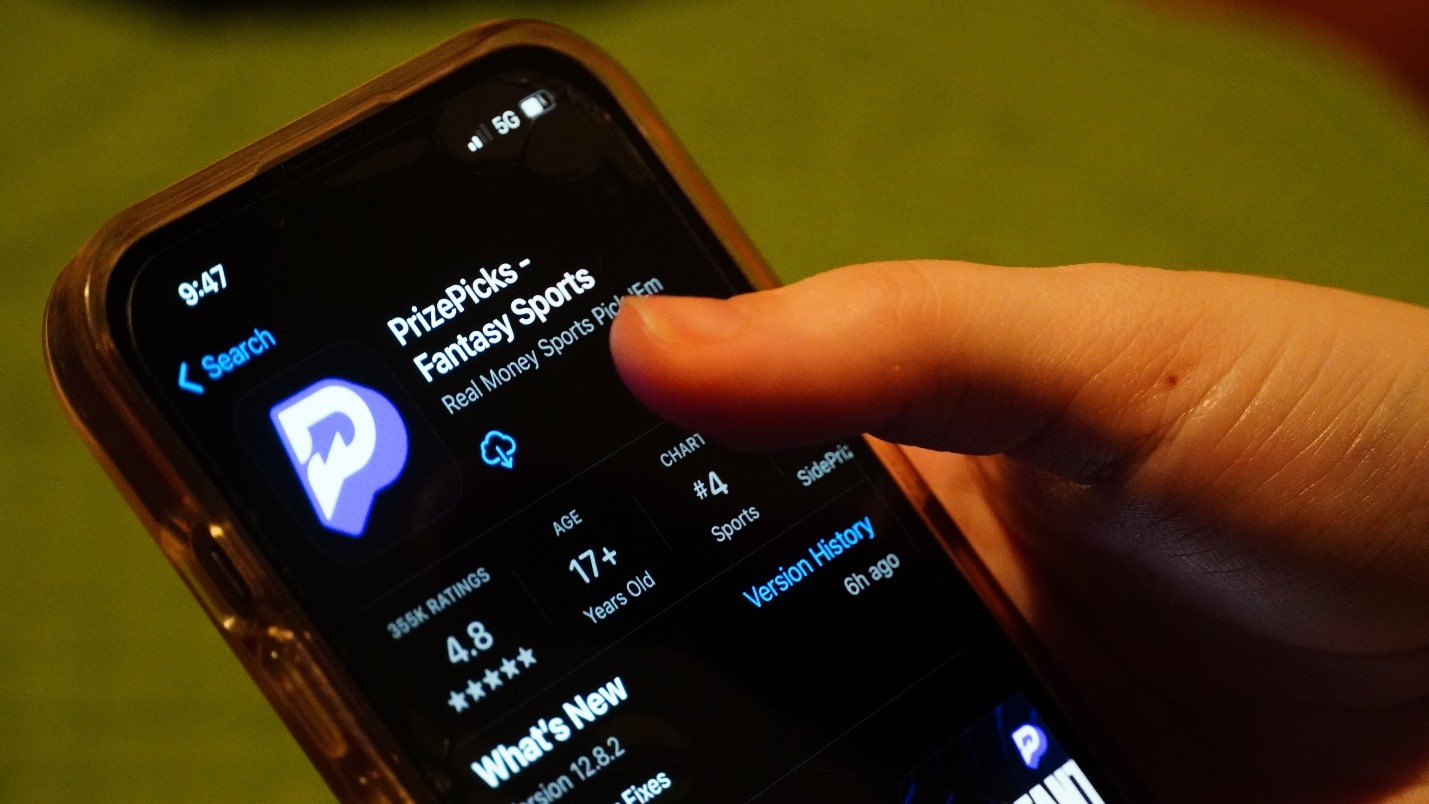
Photo by Kaylen Sifon
By Kaylen Ross
For McKenzie Riggan, an English junior, it all began with a simple referral from a coworker.
“My coworker at the time sent me a link and said, ‘If you do this, we both get $50 to play,’” she said. “I didn’t have to know anything about it; he said he’d do it for me. So, I picked basketball players, and I got $100 from that play.”
That initial win was enough to keep her coming back.
“I was constantly checking my phone to see if the guys got the basket. When they did, I was like, ‘That was great, let me try again.’” Riggan said.
Like many college students, Riggan’s financial situation is tight. What seemed like harmless fun quickly turned into an unnecessary expense.
The cycle of betting and losing
Marcus Williams, a senior in college, knows firsthand how difficult it can be to stop once you start.
“I first started sports betting when a friend at school introduced me to it. He told me, ‘It’s easy money; you just have to bet on the right players,” he said.
At first, Williams felt the thrill of winning, but the losses started piling up.
“As soon as you get that first win, you can’t really quit until you’re out of money,” he confessed. “Sometimes I would win, but more often than not, I would lose. It got to a point where it wasn’t worth it, and I was just wasting my money.”
Even after quitting, he found himself pulled back in by promotional offers.
“Another app came around offering a free $5 deal for signing up. So, I thought, ‘Why not a couple more?’ and got caught in the same cycle thinking I’d win, but never actually doing it.” Williams said.
His experience reflects a larger trend among the Gen Z demographic, who are lured in by free bets and celebrity endorsements.
“You constantly see advertisements straight from the company, from certain influencers, and from celebrities paid to promote it. Depending on what kind of content you consume, you’ll see more of it,” Williams said.
The role of apps and influencers
The accessibility of sports betting has never been greater. Riggan pointed out that the shift from in-person betting to app-based platforms has made it even easier for Gen Z to participate.
“It’s all on an app now, and apps are typically used by Gen Z. Instead of going to a sports bar or a derby to bet, it’s easy to do on our phones,” she said.
Influencers play a significant role in the growing popularity of sports betting among young people.
“Druski promotes it a lot. He’s an Instagram comedian, and his target audience is usually people around my age,” Riggan said.

The real cost of betting
For some, sports betting is just a passing phase, but for others, it can have lasting financial consequences. Williams, who spent six to eight months betting, now sees the toll it took.
“Ultimately, I learned my lesson. My pockets definitely took a hit from it,” he said. “My friend who put me on is still suffering from gambling to this day.”
Elijah Quintanilla, a recent graduate, reflects on his past mistakes in college.
“It became more popular towards the end of my college years, I feel like,” he said. “I was betting on basketball at the time, and my knowledge of the players usually gave me a good payout. It wasn’t until I turned 21 and felt the need to go to real in-person casinos to fill this gambling addiction of mine.”
The statistics behind college sports betting
The prevalence of sports betting among college students is a growing concern. According to a 2023 NCAA survey, 58% of 18- to 22-year-olds have engaged in at least one sports betting activity. The survey also revealed that sports wagering is widespread on college campuses, with 67% of on-campus students participating in betting and tending to bet at a higher frequency.
Additionally, 41% of college students who bet on sports have placed a bet on their school’s teams.
The financial impact is significant. The same survey found that nearly 6% of respondents reported losing more than $500 in a single day.
Mental health concerns are also prevalent among college students engaged in sports betting. A study highlighted by the Daily Cardinal noted that nearly 60% of college students report experiencing overwhelming anxiety, and over 40% struggle with depression.
This escape of gambling is fleeting and ultimately counterproductive. As financial losses and addiction only add to the burden of young adults’ financial status, college students are becoming a target for these companies’ gambling tactics.
Where to get help and bet responsibly
If you or someone you know is struggling with gambling, there are resources available:
- National Council on Problem Gambling – Offers support, resources, and a 24-hour confidential helpline.
- Know the Line – NCAA’s resource for student-athletes – Focuses on education around responsible wagering.
- CollegeGambling.org – A site designed for students, campus administrators, and parents to understand gambling risks and access help.
- Florida Council on Compulsive Gambling – Offers localized support, information, and counseling options.