
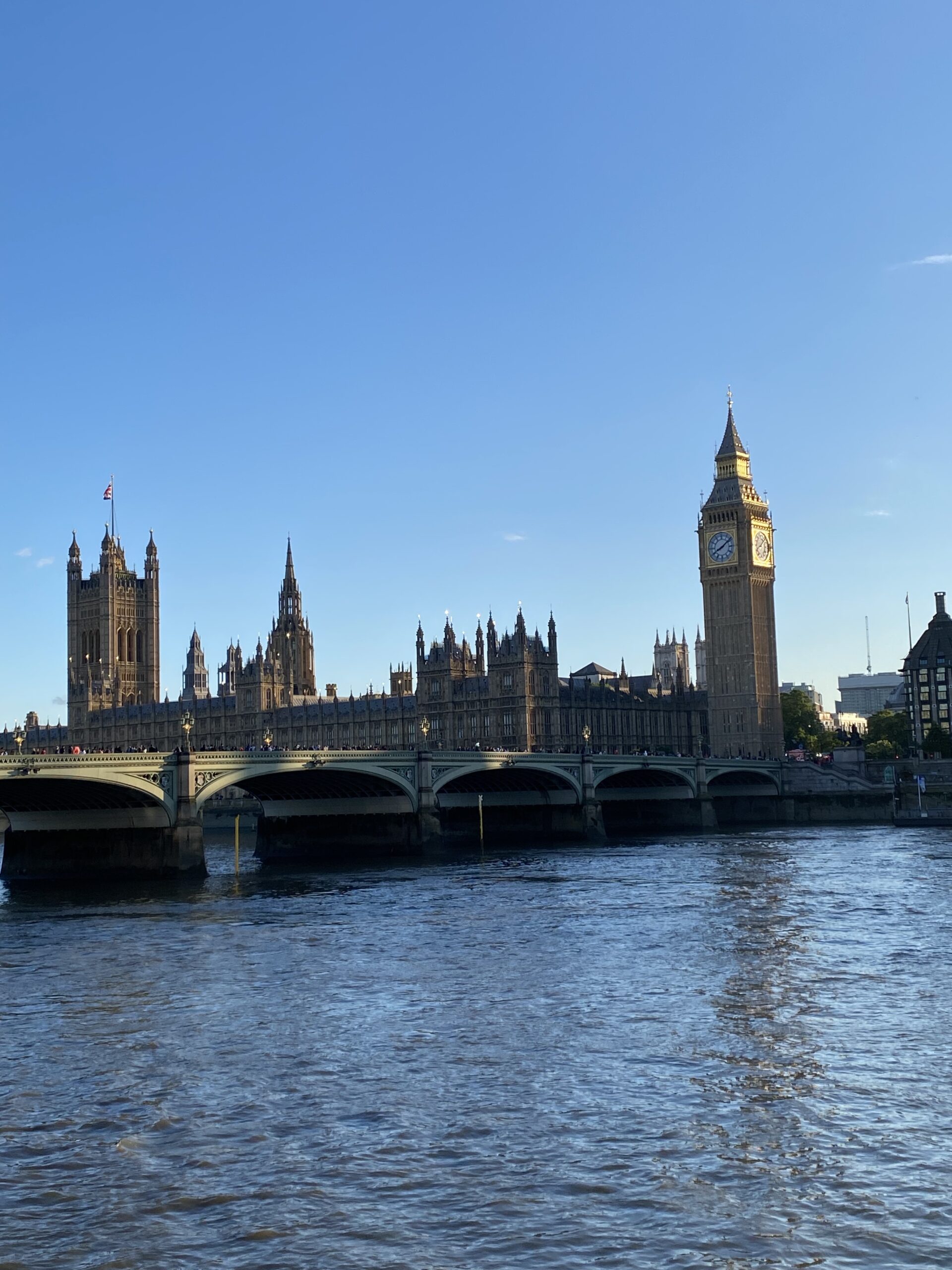
Learning about another country’s history and culture while being immersed in the location is an experience that can’t be replicated through reading a textbook or watching a lecture at home.
Photo by Julia Birdsall | The Crow’s Nest
By Julia Birdsall
It was the middle of summer, yet I wasn’t sweating or getting violently sunburnt under the Florida sun.
How is this possible?
I went to Europe for a study abroad program.
I had the privilege of being able to do this for two summers in a row. One month of summer 2024 was spent in London, England with the popular University of South Florida in London program. Two weeks of Summer 2025 were spent travelling to various cities in Ireland with a new program called Ireland Culture, Literature, and History.
Both programs presented different opportunities and experiences, but one thing that stayed the same in both cases is the knowledge I gained and the connections I made.
For Riley Benson, a USF alumni and former news editor of The Crow’s Nest, studying abroad in London changed her “career goals and academic aspirations” and helped her “become more independent.”
She recently moved cities and started a new career, which she said she would not have been able to do if it were not for her experience studying abroad.
Studying in London had a similar impact on Megan McCarthy, a senior communications major.
She told The Crow’s Nest that her experiences in London made her a better candidate for her internship and helped her personal life. The excursions that she went on for her classes, she said, were the most foundational part of the trip.
Sasha Grivas, a senior biology major and chemistry minor who traveled to Ireland with me and studied abroad in Florence, Italy, the previous year, agreed.
“You can learn about [different cultures] through reading, but actually being there is a completely different experience,” Grivas said. “You get to visually see and interact with all those people, and it’s just incomparable to reading about it.”
In both programs I participated in, class material was mixed with a series of excursions. Students could walk through the locations that they read about and get more context into how the topics discussed in the readings impacted the area.
As McCarthy and Grivas stated, this allowed for a deeper understanding of the course content and the culture we were learning about.

Photo by Julia Birdsall | The Crow’s Nest
One of the most valuable excursions I went on was in Dublin, Ireland.
After reading works by James Joyce and William Butler Yates about the 1916 Easter Rising, my class visited Kilmainham Gaol—a prison where the leaders of Easter Rising were held, which was converted to a museum.
Walking through the cells, visiting the courtyard where the leaders were executed, and reading the letters that young prisoners wrote to their families made the impact of the Rising much more apparent than it would have been with readings alone.
By studying abroad, students are able to learn about the world in a way they never could by reading about it in a United States classroom.
This can have just as much of an impact on students’ personal views as it can on their worldview.
Thalia Lafaille, a junior graphic arts major and creative director for The Crow’s Nest, took an art history class in Paris. She said that the excursions she went on for her class helped her to overcome an art block and pushed her to complete her portfolio.
“Seeing all the art there and meeting all these artists, it made me realize that my art does not have to be perfect and I don’t have to be perfect to make art,” Lafaille said.
More than that, it’s a great way to encourage adaptability that will prepare students for any unexpected situations they may experience in the future.
Benson recalled a period during the first week of our study abroad program where our phone service didn’t work, forcing us to “go old school” as we navigated London and its subway system. We adapted, and the problem turned out to be a great learning experience.
“Towards the end [of the program] I was able to understand the maps and I knew where I was,” she said.
Cece Nelson, a USF alumni who is currently applying to med schools, told The Crow’s Nest that her experience traveling solo, which was “very daunting and very scary,” can translate into any difficulties she might face in med school.
“I still was successful studying abroad by myself, so it’s allowed me to be like ‘Oh, med school will be fine, I just have to get over these hurdles first,’” Nelson said. “It’s scary, but I can do it.”
Working through complications and figuring out how to adapt to a new location with classmates on a study abroad, as Benson and I did, makes adjusting easier and helps to form quick and strong connections.
“Being able to go through [new experiences] together, I think creates a bond that can’t really be mimicked any other way,” McCarthy said.
Everyone who spoke to The Crow’s Nest expressed that studying abroad made them more outgoing and willing to try new things and meet new people.
“I met so many people I wouldn’t have ever come across,” Grivas said. “Even people from my school [with] completely different majors and people who are from completely different places than me.”
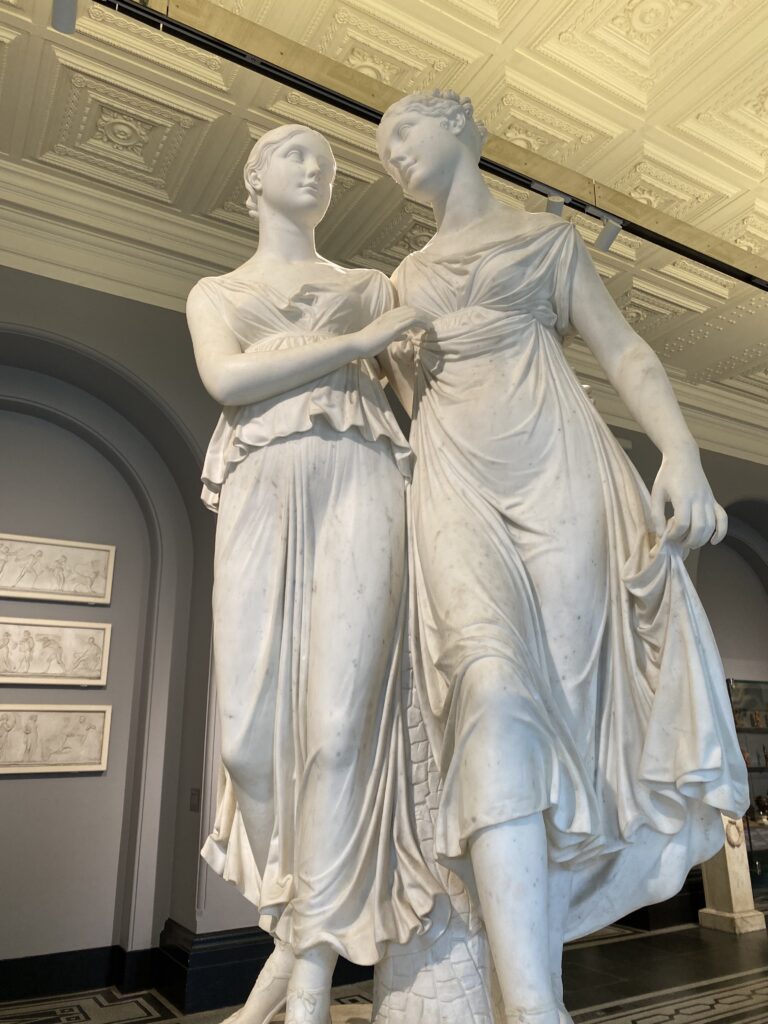
Photo by Julia Birdsall | The Crow’s Nest
Even a year later, McCarthy still keeps up with some of the friends she made in London, as do I. And the group that I went to Ireland with—which was significantly smaller than the London class—has become very close and just enjoyed the first of several planned class reunions.
USF World offers a variety of programs so that students can choose the location and classes that work best for them.
“[Studying abroad is] gonna change your life,” Lafaille said. “It’s gonna open your eyes to see other cultures outside of yourself.”
There is so much that can be gained from it in terms of knowledge, connection, and career benefits.
“It was probably one of the best experiences in college,” Benson said. “So, you have to do it.”