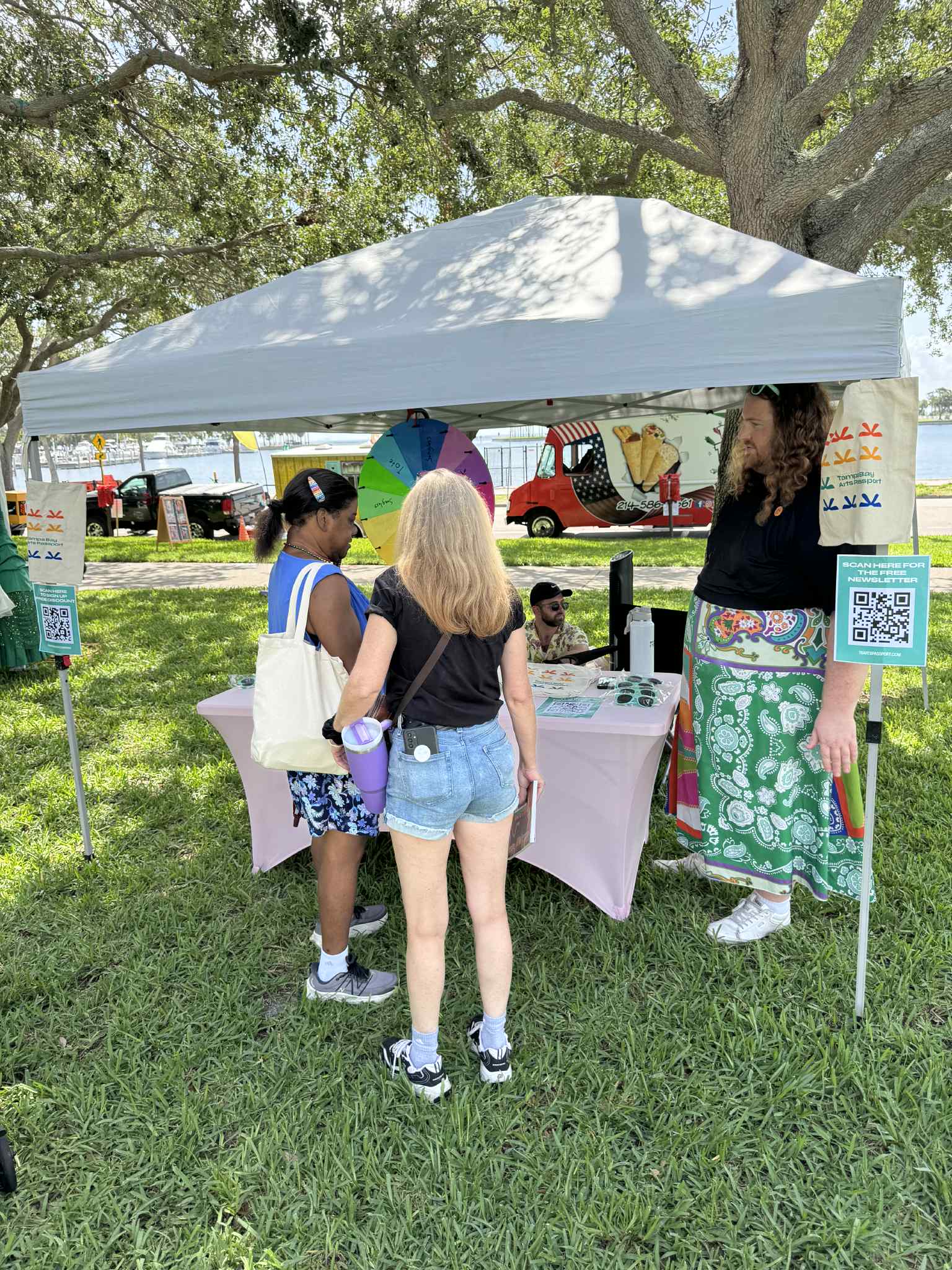
Anderson (right) tabling a booth for the Tampa Bay Arts Passport at a Pride event.
Photo courtesy of Natalie Bounds
Ever since the state-mandated removal of street murals and the decision by county commissioners to defund Creative Pinellas, the prospect of the arts has concerned residents across the Tampa Bay area.
But the arts scene still draws breath — and Avery Anderson, a marketing expert and former journalist, intends to showcase it.
Anderson’s platform, known as the Tampa Bay Arts Passport, spotlights local artists and productions through insider stories — from cello folk-rock at American Stage to acrobatic musicals at the Straz Center for the Performing Arts — all while facilitating opportunities to enjoy arts events at lower prices.
The platform is a grassroots establishment of a larger effort to bring arts journalism back into the mainstream conversation, Anderson told The Crow’s Nest.
“The Arts Passport was kind of born out of the idea that we can create stronger arts journalism in the area, which then in turn can create a better arts-loving community, which then in turn can help the artistic organizations themselves,” Anderson said. “It’s a win-win for everyone, right?”
Through a free weekly newsletter, subscribers of the Tampa Bay Arts Passport get to learn in depth about local arts and culture venues. For a $10 monthly subscription, they can unlock discounts on theatre and museum tickets, early access to arts events and exclusive articles on the local art scene.
As a platform tailored to arts exploration across the region, the passport has gained popularity among residents, including St. Petersburg locals who tout the city as an arts destination.
Victoria Rogers, a retiree who volunteers at St. Petersburg’s Chamber of Commerce’s visitor center, especially enjoys the passport’s book club, which is led by Anderson.
As both moderator and storyteller in discussions on literature by local authors, Anderson oversees a variety of themes and genres in their queue, bringing the club together once a month to discuss a story before attending an event or play that’s connected to it.
Last month, the club read and talked about “Lies in Bone,” a mystery novel by part-time St. Petersburg resident Natalie Symons, who is also an actress and playwright. Rogers said it was a joy to discuss the book with Symons herself when she attended one of the club meetings.
Above all else, Rogers also appreciates Anderson’s skill at moderating book discussions and narratives – and she likes their character.
“I love Avery because they’re not your cookie-cutter, St. Pete, old Northeast person,” Rogers said. “And I just crave that.”
For Anderson, real interpersonal interactions that come from features like the book club are essential to the human experience.
“Art is truly how we connect with other people,” Anderson said. “And we are living in a time where physical, in-person connection is so valuable.”
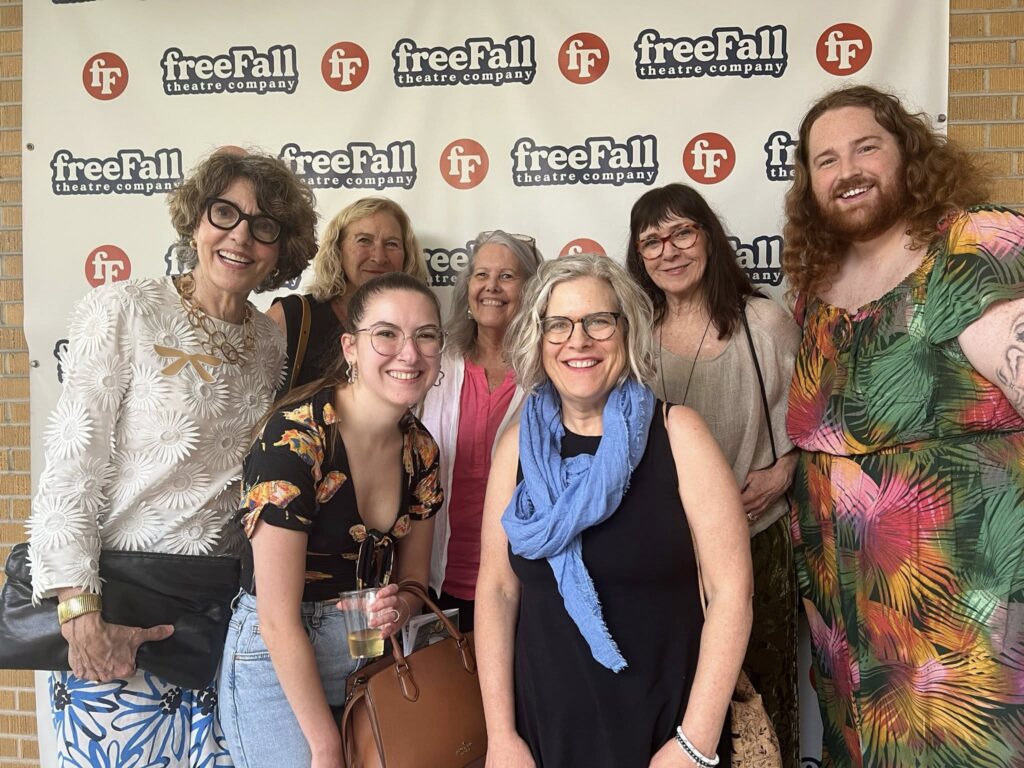
Photo courtesy of Avery Anderson
In November, the club will hold its next meeting at the Holocaust Museum to discuss a book called “Night” by Elie Wiesel, which recounts Wiesel’s plight in Auschwitz with his father during World War II.
The book club isn’t the only aspect of the platform that Anderson cultivated, however. Since they began the passport in May, they’ve written over 100 articles on the highlights and cultural analyses of local literature as well as the performing, visual and fine arts in St. Petersburg.
But Anderson’s endeavor to report on the arts has its own challenges.
“Arts journalism is a very specific thing where it’s not just, ‘Hey, here’s what’s happening,’ but, ‘Here’s what’s happening, and this is what it means in the larger conversation of the community and of the national artistic conversation,’” Anderson said.
Anderson approaches the local arts culture using their reporter’s lens, with previous experience as both a journalist and a former marketing director at American Stage.
So, their work doesn’t only hinge on spotlighting the arts. It zooms in on the problems and sociopolitical issues the arts community faces, even in the local haven that the passport appeals to, Anderson said.
“I think because there’s been a lack of real arts journalism for so long in the community, we’ve had a couple instances where the accountability that arts journalism brings rubs people the wrong way a little bit,” Anderson said.
Anderson recalled the backlash they received on one of their articles, which analyzed how the majority of Tampa Bay’s theatre productions and companies are dominated by white male playwrights in comparison to other demographics.
As Anderson sees it, that discourse is necessary for the growth of the arts community.
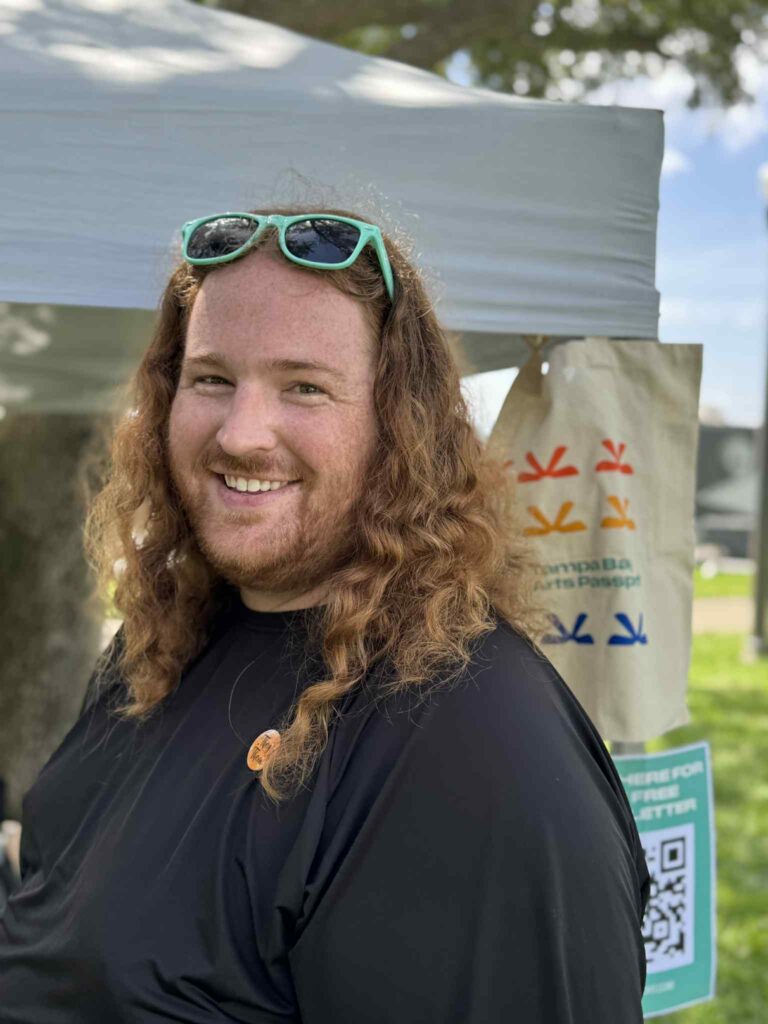
Photo courtesy of Natalie Bounds
“I always say, ‘Advocacy isn’t cheerleading,’” Anderson told The Crow’s Nest. “There’s going to have to be moments when we say we can do better. And I think that’s one of the things that good journalism does for our community. It holds up that mirror.”
Just as that mirror has been held up to the arts, local residents and arts enjoyers also have reflected on community advocacy, especially as federal and local government decisions have prompted questions of sustainability.
Rogers believes that the government overlooks the value of cultural arts in residents’ lives — and it takes its liberties in defunding what it doesn’t prioritize.
“I think art is considered something — I don’t want to say frivolous — but extra, not necessary to a lot of the current policymakers these days,” Rogers said. “And as a result, it’s an easy thing to cut, and it’s an easy target for people that are angry about cultural issues they disagree with, because frequently, I think, artists do skew more liberal.”
That was another issue Anderson said they had to tackle when bringing the arts passport to the Tampa Bay area.
They had to evaluate their platform like a business owner would, constantly revisiting one question for the sake of the passport’s relevance and revenue: how could they make arts journalism an essential part of society and of the region’s community?
Jean Sheridan, a personal wellness and success coach in St. Petersburg who is also a subscriber to the passport, said she already sees the value of the arts in its benefits to well-being — and she’s “furious” that the government fails to see it too.
“I think we ignore the importance of cultural art when it comes to managing anxiety, managing stress, well-being in general,” Sheridan said.
Visiting theatre productions as a child and listening to local jazz musicians was enriching for Sheridan, she recalled.
But she discovered an extra element of catharsis in her life when she took an improv class at Ruth Eckerd Hall that released her stress as a full-time caregiver in a way that no other recreational activity could.
“The cultural arts, for me, and I think for many other people, is a really wonderful way for me to de-stress, relax, to pause for a moment, get out of our heads, whether it’s reading a book or going to see a show or going to hear music,” Sheridan said.
When Sheridan first moved to St. Petersburg, the Tampa Bay area was a “cultural desert,” she said. It was difficult to foster connections and understand what events and developments were happening.
But in the 25 years she has lived there, she believes the arts scene has grown substantially — and the passport is a testament to that.
“The idea that I could connect with a community, that I wasn’t trying to either put together things on my own or going by myself or whatever, that there would be a group — that was really appealing to me,” Sheridan said.
Sheridan is also in Anderson’s book club and is an avid reader of their articles. With a past in improv and recurring interest in the performing arts, she said it’s pleasing that someone still has their eyes on changes and developments within the arts community.
Anderson said that, in addition to informing residents about those developments, the passport aims to uplift and give representation to various communities and rising artists.
“We’re in the South, and for, particularly, communities that are not in the mainstream and who are more marginalized, art is a way to really be seen and expressed and heard,” Anderson said. “And having a thriving art scene can really help people just feel that they aren’t alone in this.”
With the convergence of the arts and journalism, two industries that face discourse of defunding and repression, Anderson hopes that the membership model of the platform can help maintain it as it grows.
As local governments and donors continue to debate how much they’ll give to the arts, community funding will be key to sustainability, they told The Crow’s Nest.
“Someone asked me today, ‘How can I support you?’ and I just said, ‘Follow and share,’” Anderson said. “The bigger our megaphone becomes, the better chance we’re going to have at really moving the needle in helping these artists and these organizations.”