Photo by Mahika Kukday | The Crow’s Nest
By Jasmin Parrado
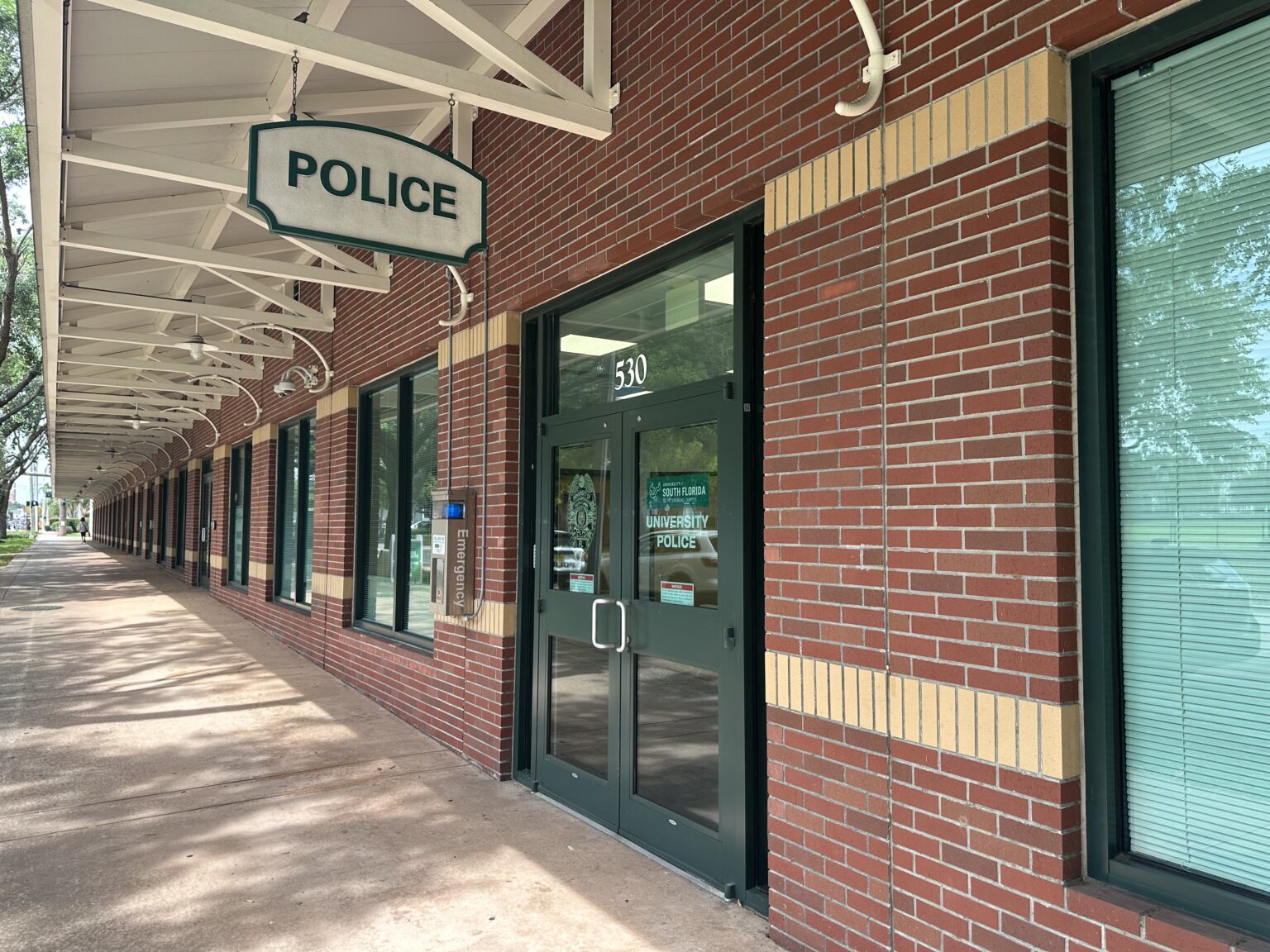
More than eight months ago, the University of South Florida said it would apply to participate in Immigration and Customs Enforcement’s (ICE) 287(g) program, which allows state and local law enforcement to act as immigration officers in support of the federal crackdown on immigration.
But in a statement to The Crow’s Nest on Jan. 5, ICE said that “the University of South Florida specifically does not have a signed or pending 287(g) agreement.”
Conversely, USF told The Crow’s Nest on Jan. 21 that the university’s statement from last year still applies.
“All Florida law enforcement agencies, including the USF Police Department and police departments at other state universities, are expected to follow the governor’s directive from February to enter into agreements with U.S. Immigration and Customs Enforcement,” the emailed statement to international students read. “At this time the agreement has not been signed by ICE and therefore is not in effect.”
A partially signed 287(g) memorandum of agreement was also posted in a previous article on April 22, 2025, by The Crow’s Nest. The 14-page document contains a signature on USF’s end from Christopher L. Daniel, chief of police at USF’s police department.
USF and FSU are the only two institutions in the State University System of Florida that do not appear as pending or participating agencies in ICE’s database.
DeSantis’ directive was released a month after President Donald Trump issued Executive Order 14159, known as Protecting the People Against Invasion.
Though the federal order requires ICE to authorize state and local agencies to carry out immigration duties, municipalities and university police departments are not explicitly required to join the 287(g) program under the presidential or state directives.
Florida has the most 287(g) participants to date, with more than 340 active agreements across local and state agencies.
Last fall, 4,756 international students enrolled at USF. Students from Latin American and Caribbean countries composed 27% of the international student population.
According to TRAC Immigration, a clearinghouse that tracks data related to federal agencies and immigration, top nationalities of those targeted and detained for deportation across the country include Mexico, Honduras, Guatemala, Venezuela and Colombia — all of which made high international enrollment demographics last fall, with more than 277 Venezuelan and Colombian students in attendance.
Uncertainty over USF’s status as a potential 287(g) participant has sparked fear in students and faculty.
After the university first announced its imminent partnership with ICE last spring, Alexa Matos, former president of USF St. Petersburg College Democrats and political science alumnus, told The Crow’s Nest that she had already noticed a shift in campus culture and that the university’s partnership “validates those who are perpetuating hate on campus.”
Matos also expressed that this program signifies federal overreach in municipal affairs.
Meanwhile, Michael Fusella, senior in finance and president of the USF College Republicans, said last spring that he doesn’t believe international students’ fears are justified. As he sees it, if students entered the country “the right way,” then they will be “perfectly fine.”
Charles Wain-Nye, senior in digital communications at USF, believes that if the university were to finalize the agreement, students and faculty would have to face fears beyond gun violence, censorship and suppression of identity — which make for an already tense sociopolitical climate.
“College is a place to learn, collaborate and experience,” Wain-Nye said. “College isn’t supposed to be a place of fear. But right now, it is.”