
Students are hopeful that “Heated Rivalry” inspires a new wave of LGBTQ+ media that does not rely on harmful tropes like queerbaiting and Bury Your Gays, instead allowing LGBTQ+ characters to be happy and successful.
By Julia Birdsall
“Queer people will take any representation they can get,” said junior environmental science and policy major Mars Kerr.
Unfortunately, representation has often come in the form of queerbaiting — when media hints at a character being LGBTQ+ or relationship between two LGBTQ+ characters but never follows through with it — or Bury Your Gays — when one or more LGBTQ+ characters are killed off after revealing their sexuality or their love for another LGBTQ+ character.
This enforces an idea that LGBTQ+ people and relationships are not meant to be acted upon, either because they are not real or because they will result in a painful tragedy.
According to junior psychology major Miah Bridges, a lot of LGBTQ+ media feels like a joke.
More often, media has begun to challenge these tropes and stereotypes.
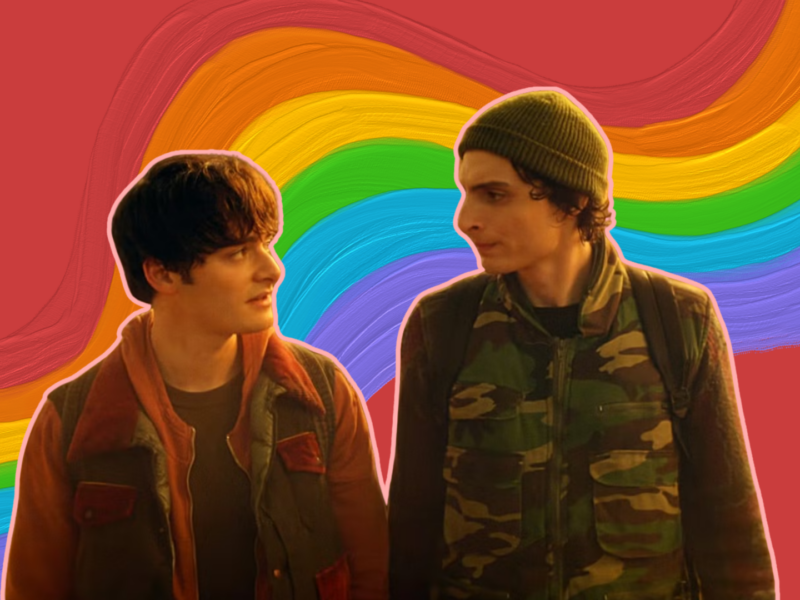
One recent and very popular example is the TV show “Heated Rivalry,” available on HBO Max.
The first season of the show premiered on Nov. 28, 2025, and it quickly broke viewing records, with episode 5 becoming one of the highest rated TV episodes on IMDb.
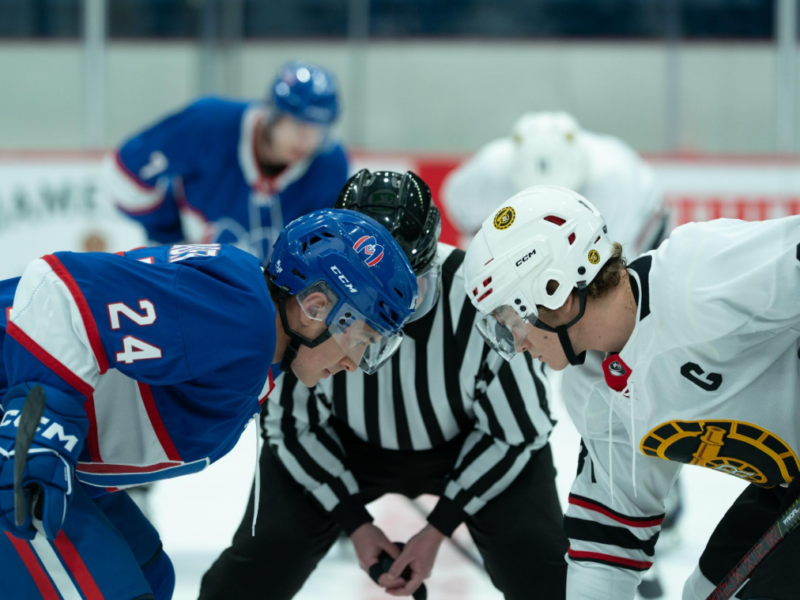
The show centers on two renowned hockey players, Shane Hollander and Ilya Rozanov, who navigate their sexualities and a secret relationship in an environment that is notoriously unkind to those within LGBTQ+ community.
It starts off with steamy scenes and ends on a tender, hopeful note that senior sustainability major Alexandra Gountas said showcases the realities of “queer joy.”
“I think it’s just really good to have a happy ending for once, because that’s very rare [in LGBTQ+ stories],” Gountas told The Crow’s Nest.
It’s so rare that Gountas and some other fans of the show were surprised by the happy ending and spent the final episode waiting for a tragedy to occur.
“That’s the way most queer media goes, it’s like, ‘Oh, something bad always happens,’” she said. “I thought they were going to get in a car crash [in episode 6], and a lot of other people did too.”
She went on to explain that the happy ending “Heated Rivalry” season 1 is more reflective of real life.
Both the main characters of the show and fans experienced queer joy — the feeling of happiness that LGBTQ+ people experience when their identities are accepted and celebrated — during episode 5 of “Heated Rivalry” when the hockey player Scott Hunter and his boyfriend Kip Grady shared a kiss on national television.
Viewers watch as Ilya and Shane’s shock transforms into hope as they immediately call one another.
The kiss, the reveal that another person in their career is like them, that gives Ilya and Shane the hope to be able to open up to one another more completely and officially enter into a relationship.
The interviewees all described the scene as a beautiful depiction of how representation can benefit people.
“Seeing gay and trans people online or in my real life was very transformative for me,” Kerr said. “So, getting to see them [Ilya and Shane] experience things like that, because they’re so deeply closeted, it’s so nice.”
Bridges also enjoyed watching the moments where characters could be themselves, stating that she could relate to the characters’ struggles.
“I also grew up, hiding my identity, my sexuality for a long time,” she said.
Bridges continued on to say that she related to the struggle of not being able to come out for fear of what may happen to them, as she experienced this when coming out to her own family.
People on the internet have expressed similar sentiments after finishing the show, and it even inspired former hockey player Jesse Kortuem to come out publicly earlier this year.
“I know many closeted and gay men in the hockey world are being hit hard by Heated Rivalry‘s success,” Kortuem said in an interview with Out Magazine. “Never in my life did I think something so positive and loving could come from such a masculine sport.”
However, where the show surpassed expectations on LGBTQ+ representation, it failed to measure up when representing people of color.
“They mentioned Shane being Asian like twice, but they don’t actually show it,” Kerr told The Crow’s Nest.
LGBTQ+ media is typically very white-centered. When there is LGBTQ+ media that features people of color, it utilizes the same harmful tropes that fans hope to steer away from.
Bridges and Kerr expressed a desire to see more LGBTQ+ people of color who are allowed to experience happy endings.
“I would love to see — I don’t really care if it’s like gay men or lesbians — but something with two main leads that are both people of color,” Kerr stated.
Neither Bridges or Kerr foresee this being an easy feat for tv show and movie creators.
“I feel like if they were to bring women of color that are gay into shows, I feel like most people would just look at the fact that they’re people of color and not that they’re gay,” Bridges said. “And that’s not what we want. We want them to look at both.”
Taking an intersectional approach to LGBTQ+ media can ensure that no one has to “take any representation they can get” and can instead consume media that doesn’t rely on harmful tropes and stereotypes.
Everyone deserves to experience the joy of seeing themselves in the media they consume, and “Heated Rivalry” is both a step in the right direction and a reminder of how much further we have to go.
“Queer joy is real, and it can be shown through media,” Gountas said. “It’s not just some fictional… thing that doesn’t exist, it is a real thing. It deserves to be shown as a real thing.”