
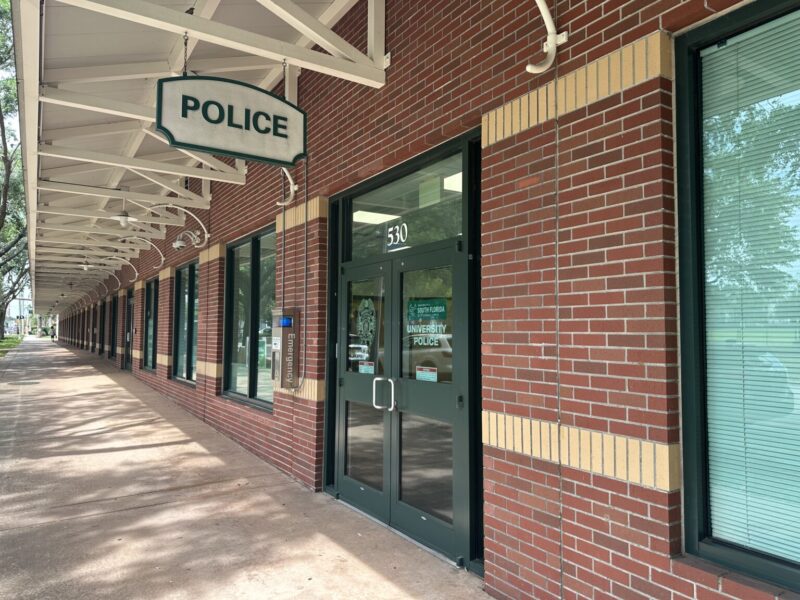
True crime has a tendency to paint cases as black and white and homogenize them. In reality there is a lot of gray area and cases have their own unique features and causes.
Photo by Mahika Kukday | The Crow’s Nest
By Zariya Bankston and Julia Birdsall
When literacy rates began to grow in 16th century England, one of the rising genres among new readers was vulgar and bloody: True crime.
According to JSTOR Daily “Hundreds of crime pamphlets — short, unbound books of roughly six to 24 pages, usually detailing horrific murders — circulated during this era.”
Since then, true crime has continued to circulate globally through various forms of media. Most recently, true crime documentaries, podcasts, Tik Tok videos and YouTube commentaries have dominated the internet.
Hit Netflix shows such as “Dahmer” and “Monsters: The Lyle and Erik Menendez Story,” have accumulated millions of viewers, the majority being from the true crime community — a group of people who share a fascination and interest for the genre.
“There are different reasons why people turn to it,” Dawn Cecil, a criminology professor at the University of South Florida St. Petersburg, told The Crow’s Nest. “A lot of people will say, ‘Well, I want to know why people commit crime.’ Other people want to know, ‘Well, how do I protect myself?’ Because those messages are kind of in there. Some people just like dark stories and fear for entertainment.”
A senior who chose to remain anonymous told The Crow’s Nest that he watches true crime videos on YouTube while he completes tasks.
He falls into the first category of true crime watcher that Cecil outlines — he wants to understand why people commit crime.
“It’s human nature to be fascinated with…why certain things happen,” he said. “Trying to understand why things happen can lead us to a better understanding of how we can recognize these patterns… and recognize those red flags in our communities [and] other people.”
However, many people have begun to question the morality of true crime and the people who consume it.
Sophomore political science major Morgan Heimkreiter liked true crime media when she was younger but eventually decided to stop interacting with it because she disliked the way most content portrayed victims of crime.
“I think it’s a very disgusting thing to be using somebody else’s trauma and family,” she said. “Most of the time, victims… or their families are not being reached out to for these things and they don’t even provide resources at the end of these videos.”
USF St. Petersburg criminology professor Cary Hopkins-Hall also finds the portrayal of victims to be problematic in true crime media.
“I think there’s a lot of potential for harm there. If it’s not done correctly, if it’s not done with a lot of integrity and care,” she said.
Some media has the effect of turning crime into fiction and victims into fictional characters in people’s minds, Cecil felt.
Heimkreiter agreed.
“By characterizing them, they don’t get the whole justice, and they’re seen as a different person than they actually were,” she said.
True crime media that is fictionalized can also distort people’s perception of which crimes they are more likely to be susceptible to.
“When you fictionalize [crime], you might be telling people kind of the wrong story,” Hopkins-Hall said. “You know [people are] going to be expecting, like, ‘Oh, I got to be careful around the stranger rather than my uncle’s friend that I know kind of now.’”
However, there are some true crime creators that work with victims and help others seek justice, Cecil, Hopkins-Hall and Heimkreiter noticed.
“There’s a podcast I like called ‘Crime Weekly’… when they sell merch, that money goes toward things like doing DNA testing in unsolved cases that have been floundering for a while,” Hopkins-Hall said. “So, there are people out there, I think, that are really doing [true crime media] for the right reason and really having an impact.”
True crime media has also helped to spread awareness about crime.
“There have been some… really important stories that have been told,” Cecil said. “They’ve raised awareness or they’ve actually changed the outcome of a case.”
Cecil cited the case of Curtis Flowers, who was convicted six times for a quadruple murder.
The investigative journalists who created the true crime podcast “In the Dark” looked into Flowers’ case and found that the prosecution lawyer was striking people of color from the jury so that Flowers, a Black man, would have a higher chance of being convicted.
Because of “In the Dark’s” work, Flowers’ case was eventually overturned by the Supreme Court.
However, true crime media has hindered investigations more often than it has helped.
Especially when crime cases are publicized on the internet, wrongful online prosecution of strangers can occur.
“There’s a chance you might help,” Cecil said. “When we look at Gabby Petito, there was one little bit that helped, but we look at the Idaho Four, nothing [helped] and it was just such a mess.”
In the case of the Idaho Four, the speculative but detailed nature of true crime media left people online with the presumed ability to play jury and judge, causing detrimental effects on the people close to the victims, as well as the case itself.
Victims were being accused of committing the crime, further traumatizing them and casting their stories into doubt, as well as leading the police astray from the true culprit.
“Now that we’ve seen that people have been wrongly convicted and things like that maybe we should be a little more cautious,” Hopkins-Hall said. “Because, you know, we could be [demonizing] someone and they might not even actually be guilty.”
The true crime genre also plays a part in the mischaracterization of people with mental illnesses.
If someone’s perception of mental illness was created only through watching true crime, it can perpetuate negative stereotypes.
The anonymous senior and Hopkins-Hall both felt that people sometimes demonize those with mental health issues because of negative stereotypes spread by true crime media.
“We equate mental health and dangerousness, which isn’t necessarily true,” Hopkins-Hall said. “It’s one of those topics where you have a lot of people talking about it who aren’t trained, aren’t experts and can make generalizations that are not good for anyone.”
True crime also has a clear gender and racial bias.
“We over-represent and then misrepresent women as victims and as offenders — that’s really white women that we do that with,” Cecil said. “So, when we see women of color from other marginalized communities, we don’t see them as often in true crime. So, we don’t get to hear their stories.”
Cecil mentioned “missing white women syndrome.”
Missing white women syndrome describes the high levels of attention that white women — typically those that are upper-middle class, young and attractive — receive from the police, media and the public.
Contrarily victims who are women of color receive a disproportionate amount of attention.
“True crime tries to respond to that, like, ‘Oh, look, we know we’re ignoring missing and murdered Indigenous women or missing and murdered Black women…we’re gonna fix that and we’re gonna give you a special about it,’” Cecil told The Crow’s Nest. “But it usually is short-lived…it doesn’t really do anything to counteract the stereotypes that are there.”
Hopkins-Hall also mentioned the lack of representation for women of color in true crime media.
“A lot of times you see, ‘This white woman disappeared,’” Hopkins-Hall said. “But then there’s so many Black women who are missing right now that no one is looking for besides their families. So, I think that’s one big issue is, who are these stories representing?”
Cecil spoke at a Rockhurst University panel in Fall 2025, where she discussed the ethics of true crime media and she encouraged people to think about how they can responsibly consume and create true crime content.
True crime creators have a responsibility to tell the stories of victims, perpetrators and cases with as much accuracy and empathy as possible, she said.
With social media true crime’s rising popularity, anyone can share their opinion on real-life cases.
With old murder cases still gaining attention and tragedies continuing to happen, the true crime genre is here to stay.
But the aftermath of who this genre may affect lies in the hands of the people who consume it.
“It’s really important that people watch it with sort of sensitivity, but then also with respect to the fact that these are real people and real experiences that people go through,” the anonymous senior said. “People forget about that all the time, but that’s always a lens that I stick to, to make sure that I’m not so desensitized by what I am watching.”