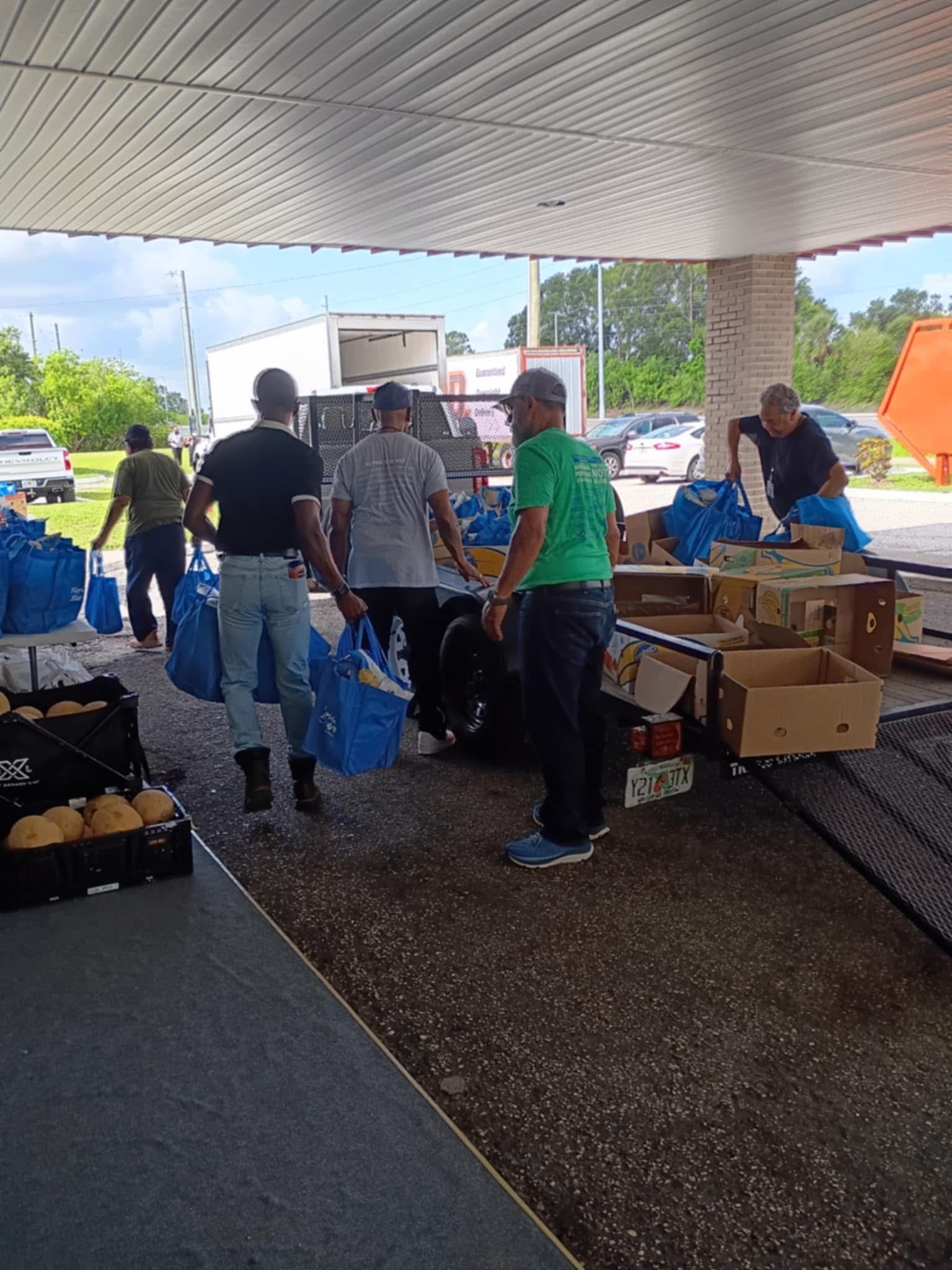
Volunteers and church members unloaded resources for the annual Family Health and Food Fest event.
Photo courtesy of Wholesome Church
By Jasmin Parrado
In the sweltering summer heat, trucks were ushered along the small concrete lot near Wholesome Church in Wimauma, Florida.
Stocks of food, toiletries, toys and laminated health fliers filled boxes at the ready for the church’s 17th annual Family Health and Food Fest event. Volunteers sporting logoed polos rushed by with heavy supply bags piled onto their hands and smiles on their faces.
All the while, attendees and church members engaged in conversation. The flow of Creole French and Spanish mingled in the space of the church’s dome.
This was just one out of many outreach scenes that the University of South Florida’s College of Nursing participated in.
Equipped with medical expertise and the oath of care, staff and student volunteers have attended these events to address healthcare needs across the Tampa Bay area.
With a mission to provide health resources to vulnerable groups, the program’s collaborative efforts give a glimpse into how educators and community leaders across Florida are tackling access to health care together.
Sharon Benitez, a senior nursing student at USF, believes that events like the one at Wholesome Church significantly help others understand what services are available to them.
“A lot of the things I’ve seen walking around, I myself had no idea they existed,” Benitez said. “I think it’s an amazing resource that we have in the community, and it’s really nice when places put on big events where different vendors come to showcase what they have, because it is hard to find.”
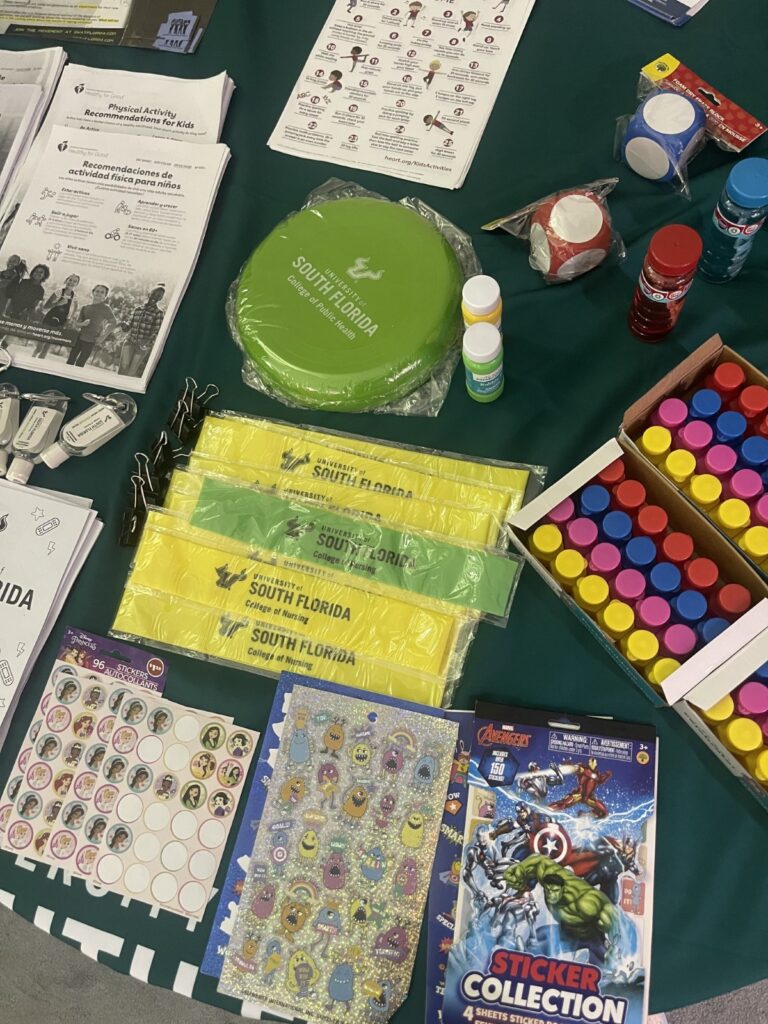
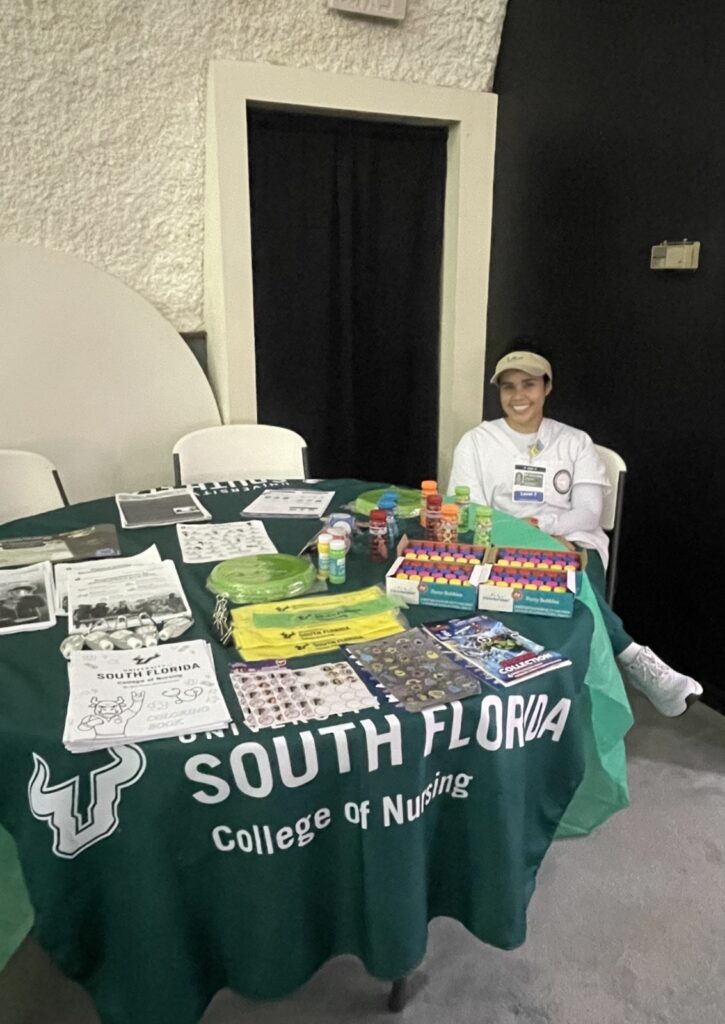
Alongside other organizations and companies, Benitez represented USF College of Nursing and managed a stand where she promoted education about healthy lifestyle choices.
Frisbees, resistance bands and stickers attracted parents and children to the stand, and readily available flyers promoting physical activity and dietary guidelines also filled their goodie bags.
That was the sight USF volunteers wanted to see, especially as proponents of Healthy People 2030, a plan spearheaded by the U.S. Department of Health and Human Services.
The plan includes a nationwide initiative to improve health every decade. It considers data surrounding the social determinants of health (SODH), which are defined as the “conditions” that factor into the quality of people’s lives. These range from education access and environmental factors to social contexts and access to healthcare.
Carlos Irizarry, registered nurse and pastor of Wholesome Church, is familiar with these determinants, like most of the country’s healthcare force. Through his work, he aims to improve the conditions that limit and endanger communities.
“[Patients] don’t always have the transportation. They don’t speak the language. They don’t have benefits. So, just saying, ‘Go to the doctor,’ is doing an incomplete job,” Irizarry said.
For more than a decade, Irizarry has hosted health-centered events like the Family Health and Food Fest to promote physical and mental wellness among church members. With group walks, mobile mammogram screenings and the annual health festival in rotation, he has promoted the same message to his members.
“You do what is in your power,” Irizarry said. “Too many people just live. All of a sudden, they give up, and they’re just breathing. They’re not putting joy to their life. And enjoying life doesn’t mean there’s an absence of disease. If that is out of your control, what is in your control?”
At the festival, other agencies like Tampa General Hospital, Suncoast Community Health Centers and United Way Suncoast provided health and social services to attendees. Patients came for blood glucose and pressure tests, eye exams and weigh-ins before reporting to USF Health volunteers for interpretations.
The event served as an opportunity for student volunteers to gain real-world experience and feedback about what attendees needed, while analyzing how certain social determinants actively affect most households.
“I don’t think a lot of people understand how important nutrition is, especially,” Benitez said. “And it’s really hard to talk about it, because if you don’t have the resources to get good food, it’s hard to even give that to your kids, you know?”
Benitez’s observation highlights the disparities groups face and how their ability to receive adequate healthcare is affected. Healthy People 2030’s summary on poverty, for instance, describes how “certain racial and ethnic groups, people living in rural areas and people with disabilities” are more prone to poverty due to systemic prejudices.
Additionally, a study published in the National Library of Medicine in 2023 revealed how social determinants of health tend to be disproportionately worse for people of color.
Volunteers had to take these determinants into account, Benitez recalled.
“It’s like, ‘What is available? What can I get now, especially with inflation, for example?’” Benitez said. “But I don’t think people who are not in nursing or medical school realize how much nutrition really affects your body and how that plays a role when you’re older.”
Michael Canizares, level 4 nursing student at USF, also noted how the most prevalent health issues among attendees included hyperglycemia, a condition of high blood sugar that often results from imbalanced dietary habits.
“A lot of people don’t have the time to meal prep, and a lot of these patients have maybe bigger families that don’t always eat the best and exercise the best,” Canizares said. “Why is that? They don’t have the resources for it. They don’t have the time. They’re working full-time, maybe lower-income jobs.”
According to the 2023 NLM study, factors like housing instability, lower standards of health promotion, environmental dangers and a lack of resources for food due to socioeconomic disparities are a few of the determinants that marginalize groups on the structural level.
“For lower-income communities, it’s a societal issue that stemmed over decades that has allowed for less resources to be in these areas, therefore less education,” Canizares said.
That’s where USF’s College of Nursing comes in. Students at the health festival interpreted and explained the results of free health screenings for blood pressure, blood sugar and cholesterol. Multilingual participants communicated details to attendees in their preferred languages.
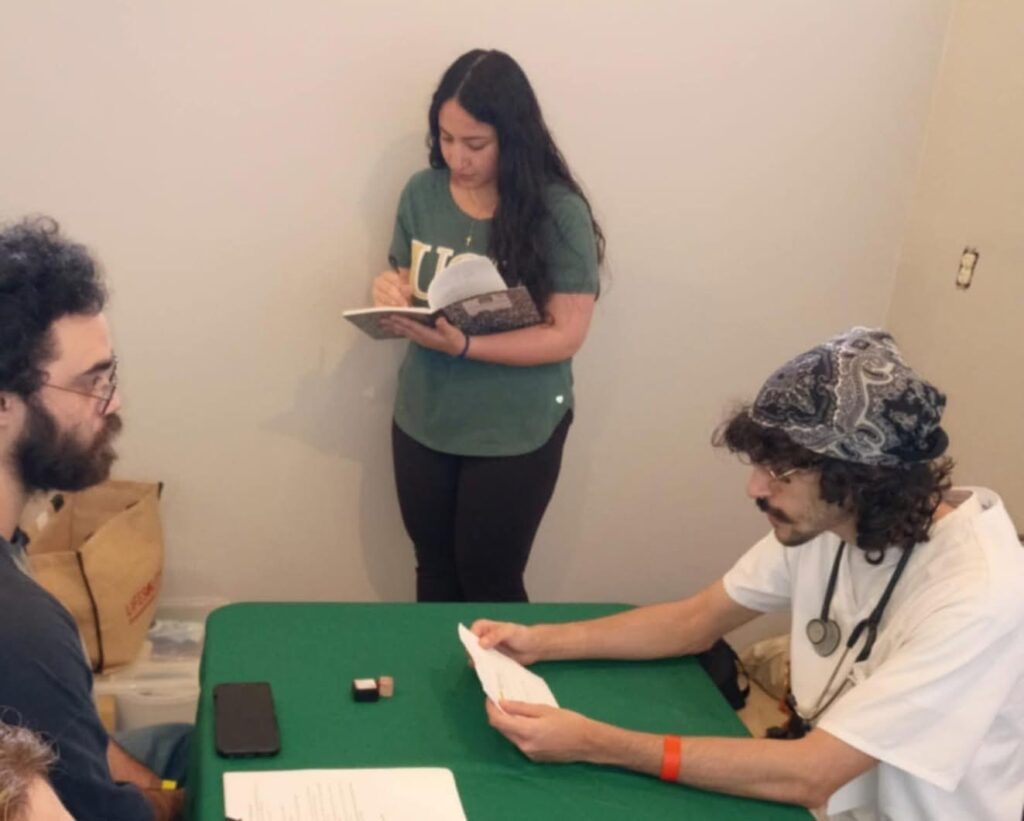
Photo Courtesy of Wholesome Church
Wholesome Church’s annual festival is not the only event that USF nursing student volunteers have signed up for, Canizares said. From the Global Citizens Project to the countless on-site event dates shared across department emails, students and faculty are offered various ways to provide care and education.
Canizares especially appreciates the church’s outreach mission, as his family has known a similar experience of need.
“My parents would do these things when we were younger. We used to visit places like this. There’s a lot of shame that they felt, that they associated with it,” Canizares said. “But there is so little that is done at the higher level for the people. It’s beautiful that a church can come together and offer a free resource like this to genuinely help and give back to the community. I think that’s amazing.”
Irizarry’s work doesn’t stop at hosting these events. His work has included providing organizational leaders and policymakers with an on-site glimpse into housing conditions in rural Wimauma and discussing economic issues with pricing committees. He has also surveyed underrepresented groups and performed needs assessments across the community.
“Most of the time, I advocate, because you speak for those who cannot speak for themselves,” Irizarry said. “You say, ‘Let me bring more reality to your service.’”
Irizarry believes that despite the challenges and uprise in social conflicts that make these communities more vulnerable than ever, they deserve to thrive in all areas of health and wellness.
“As nurses, we have an oath to help people in the spirit and the mind and the body,” Irizarry said. “What I’m hoping for is for people to become more independent and to take ownership of their health.”