

Photo by Matthew McGovern | The Crow’s Nest
By Matthew McGovern
Aside from taking part in the same movement from the 1920’s through the 40s, Giacometti and Dalí, at first glance, do not have much in common.
Dalí is famous for his absurd and grotesque depictions of the female form, allusions to male genitalia through subverted images (some more or less than others), and double imagery that warps the mind and forces the viewer to ponder the difference between hallucinations and reality.
Swiss sculptor and painter Alberto Giacometti was better known as the former — a sculptor whose works often depicted more ghoulish.
Similar to other acclaimed visual artists of their time, in their youth, Dalí and Giacometti painted in a post-impressionist style— a stark contrast from what was to come later in life.
Dalí’s early work depicts his summer home of Cadaqués, where the Pyrenees mountains dip gently into Port Alguer and the Mediterranean Sea in central Spain. The Swiss Alps are the main subject of most of the paintings from Giacometti’s youth in the exhibit.
The warm summers of Cadaqués and amber-ing leaves during the onset of Fall in the mountains of Switzerland are displayed near the entrance to the James Gallery at the Dalí— a clever means of contextualization for the rest of the exhibit.
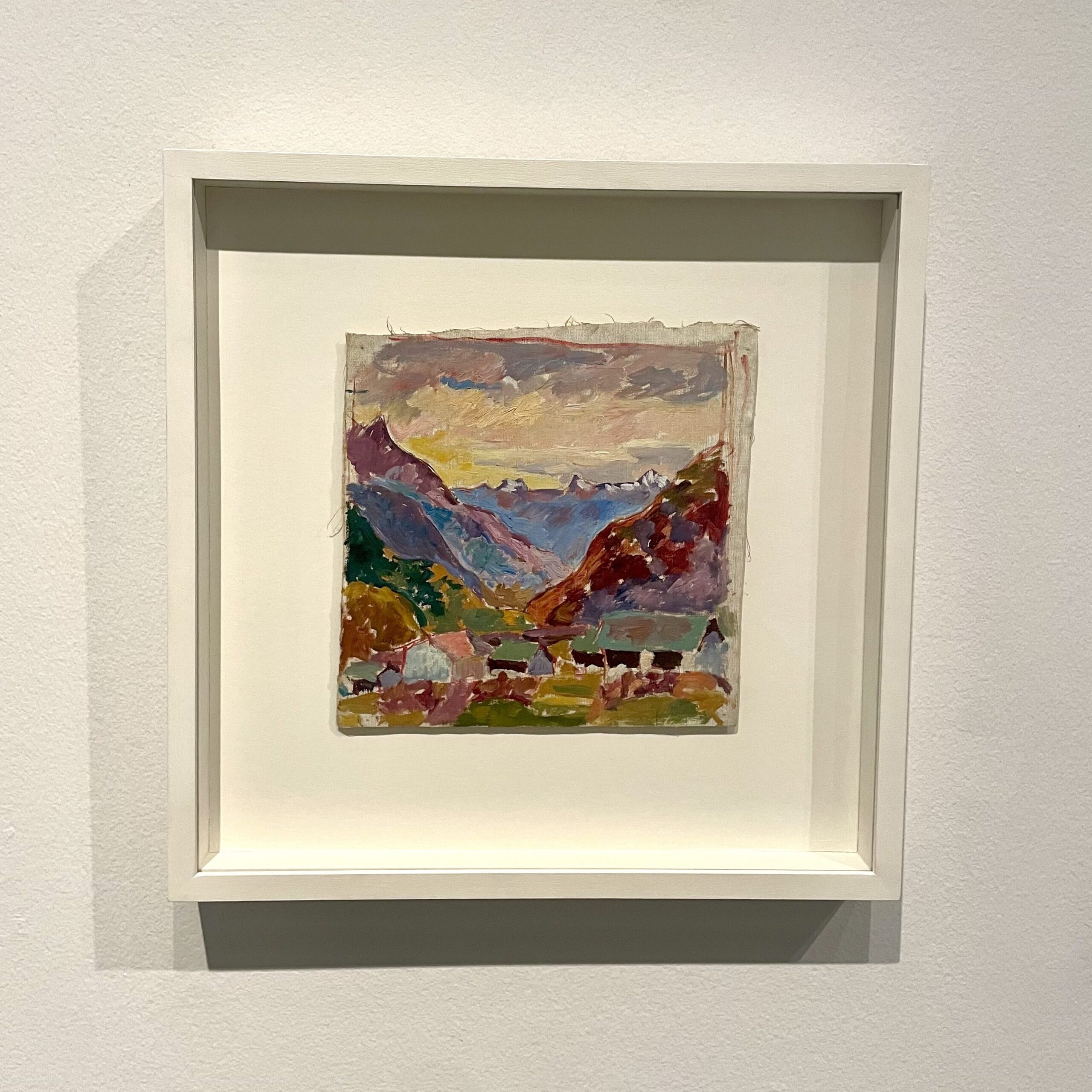
I was particularly charmed by the placards that provide descriptions for the art on display. The name of each artist is displayed clearly, making the viewer better able to distinguish whether the work was created by Dalí or Giacometti.
In this first room we are also introduced to the early sculptures created by Giacometti.
Cubist study of figures on a beach echoes the Cubist style popularized by Pablo Picasso, Juan Gris and others.
Moving from the first room, there is an immersive projection display where guests can input prompts into their phone near the entrance to the room, then see their surreal vision come to life around them.
I’m sure this is a lot of fun for guests of the museum. However, I personally feel that these sort of “immersive” exhibits or aspects are often a gimmick, especially given the Dalí Museum already has a half-dozen of these gamified aspects to the museum experience, some of which are executed better than others.
Unfortunately for me, the experience failed to display my surreal fantasies on the walls on each of my two visits to see this exhibition.
Thankfully, this projection show won’t cost you an extra $15 on top of the $30 admission to enter the building.
As I moved into the main room for this show, it felt like a world-class experience. I had been at the Museum of Modern Art (MoMA) in New York just a few days prior, and the feeling I had at the Dalí in this section of the James Wing did not feel all that far off from what my favorite museum I have visited to date.
As fate would have it, I had already visited the Dalí to write this review before my trip and found myself taking a prolonged look at Giacometti’s The Palace at 4 a.m. This was a primarily colorful work on paper, hung on the white wall of the gallery.

When walking through the creaky hardwood floors on MoMA’s fifth floor, which houses a large collection of surrealist art including that of Giacometti and Dalí, I saw something strikingly familiar in a glass box.
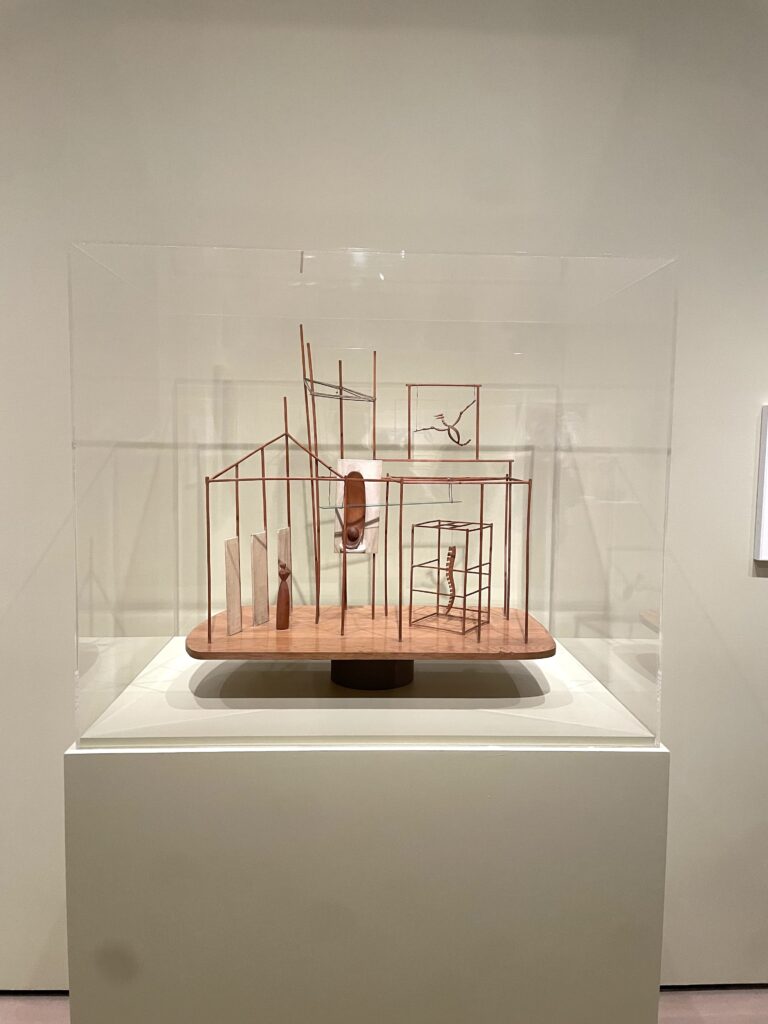
It was a 3-D rendering of The Palace at 4 a.m.—a nice touch if you ask me. I couldn’t have planned to make this connection even if I tried, but it was a welcomed surprise.
The displays were clearly designed to highlight sculptures of Giacometti and Dalí. The way that the space breathed life and context into these three-dimensional works of the artists by means of works on paper and oil paintings was succinct, terse, and easy to understand.
One of Giacometti’s nearly eight- foot- tall, decomposing and deeply imperfect human forms towered over the center of the gallery. Eerie and foreboding, but equally intriguing.
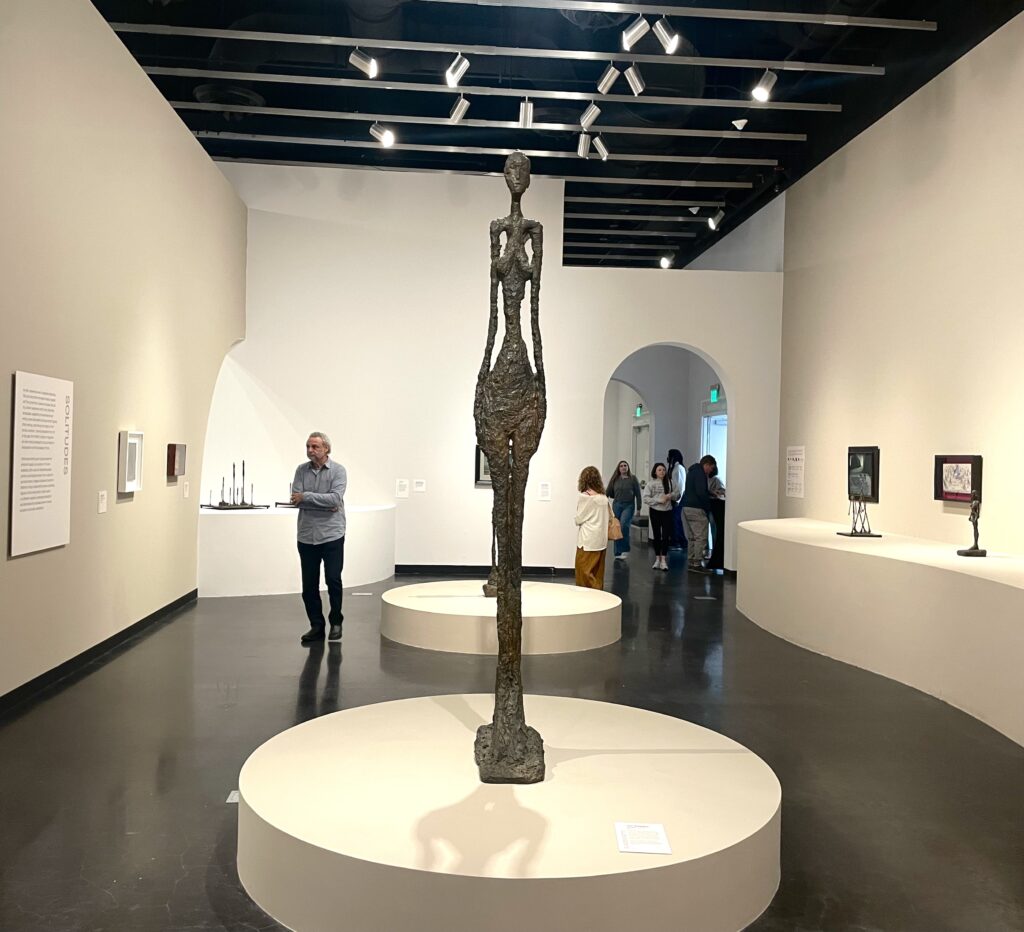
As I wrapped up my second visit, I realized that Giacometti and Dalí do not speak a similar visual language in their work. Rather, they depict the two sides of Surrealism.
In becoming familiar with the life of Dalí in the past year, I have come to notice his pattern and affinity for choosing warm, almost inviting tones in his paintings. This is a juxtaposition from the subject matter, which is often, as described previously, grotesque, confusing and sometimes downright repulsive (see: Beignuse, 1928)
An investigation of his works, both large and small, thus takes place. There is so much to see and the compositions are so loaded yet so soft and gentle on the eyes at first glance that it feels impossible to look away.
As for Giacometti’s sculptures and drawings, they are so unsettling, so eroded and worn that it prompts contemplation and a sort of confusion. Towering figures and scribbles on paper feel so detached from reality and do feel as though they were born of the darkest part of a dream. Much of the human forms in his sculptures exist like sleep paralysis demons.
Dalí, the light remixing of what had been seen in his life and Giacometti, the things that we pray our mind won’t show us on our most restless nights.
For any USF St. Petersburg students looking to make the most of their free admission to the Dalí museum — do not pass up this opportunity.
GiIacometti and Salvador Dalí: Through and Beyond Surrealism will be on show through April 19, 2026.



![“[The 9/11 Memorial Stair Climb is] really to show our support and help build community and camaraderie with the first responders that are putting on this event at the Rowdies Stadium and to showcase our office and give the student veterans here and miliary-connected students something positive to do that day and a feeling of belonging,” veteran and junior personal financial planning major Thomas Wells said. Courtesy: Tampa Bay Rowdies](https://crowsneststpete.com/wp-content/uploads/2026/09/Stair-Climb-1.jpg)