By Secilia Ruiz and Ashley Pena
Content Warning: This article contains discussions of sexual violence.
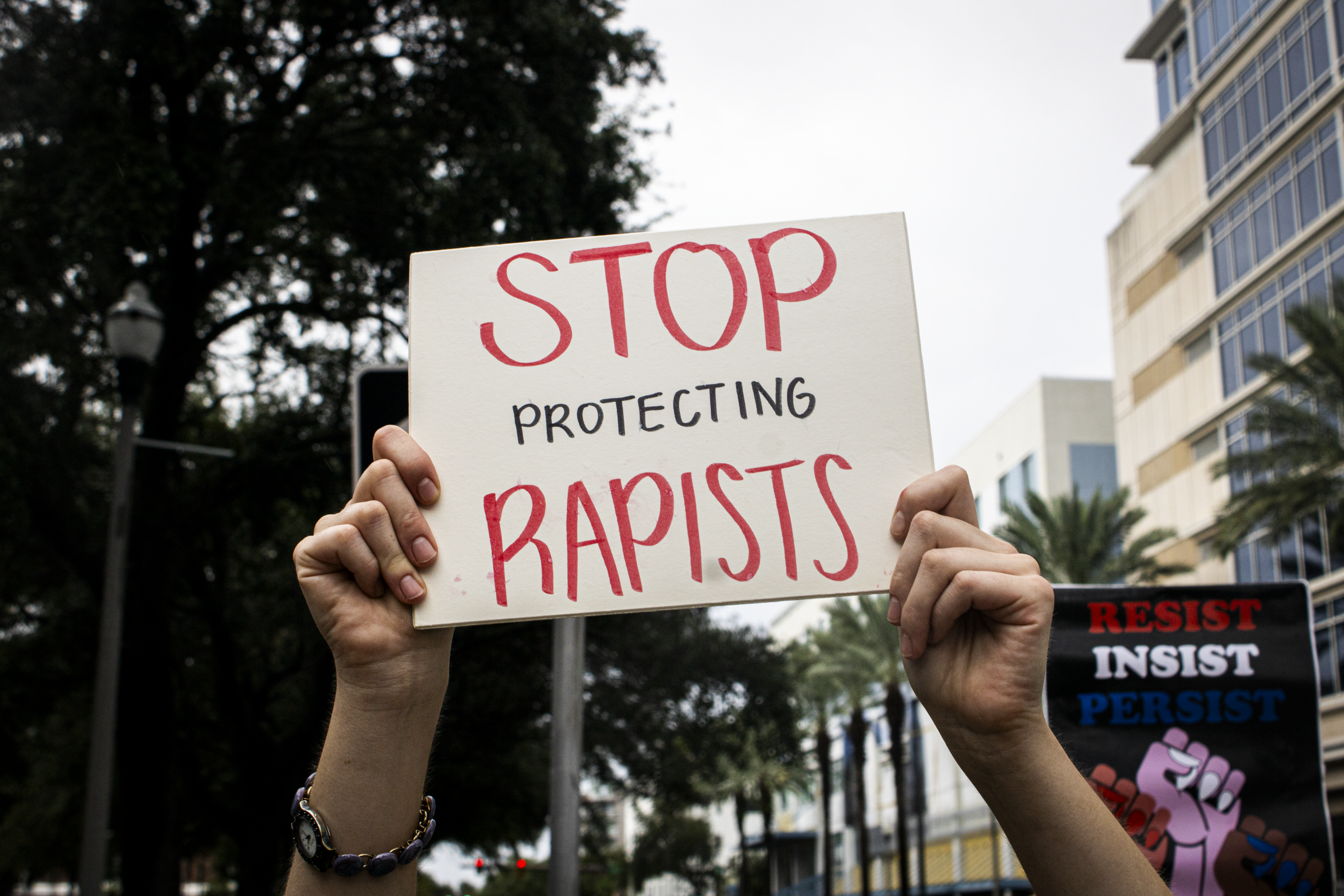
A recent civil lawsuit filed against Ivy League institution Cornell University by a former student, referred to as Jane Doe, has sparked national debate.
Doe was an undergraduate student in 2024 when she went to a party at the Chi Phi fraternity house and was allegedly gang-raped by seven members of the chapter while severely intoxicated after being coerced into ingesting multiple hard drugs.
As a result, many students are holding a mirror to their own college campuses and questioning how universities, and the legal system as a whole, handles instances of sexual violence.
A timeline provided by The Washington Post details the resulting investigation, including the backlash for both Cornell and the Tompkins County District Attorney’s handling of the case, which many believe to be unjust, as none of the fraternity members were criminally charged and only two were expelled.
“[The case] definitely made me feel annoyed and kind of unsafe as a student, knowing that people aren’t getting punished properly,” freshman animal biology major, Nora Motta, told The Crow’s Nest.
Within the University of South Florida St. Petersburg campus, there are a number of resources and procedures that exist in response to such cases, such as the Patsy Mink Equal Opportunity in Education Act, commonly known as Title IX and USF’s Center for Victim Advocacy and Violence Prevention (CVAVP).
“Speaking with a CVAVP advocate does not mean an official report has been made… Students also have the option to report anonymously via Ethics Point,” Senior Director of Media Relations at USF, Althea Johnson, mentioned in a statement on behalf of USF’s Title IX office.
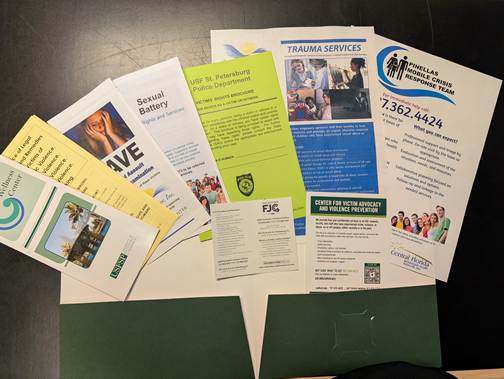
Photo Courtesy of the University Police Department at USF St. Petersburg
Johnson also added that Title IX prohibits sex-based discrimination of either employees or students. The federal law applies to all USF programs and activities.
Herskowitz, a civil attorney that focuses much of his caseload on sexual abuse and exploitation, reached out to The Crow’s Nest in light of the recent lawsuit.
“I don’t think you get your full cup of justice under Title IX. It’s a federal statute written for the universities. So, it’s really going to protect them more than anything,” John Herskowitz, attorney and managing partner of the Baron, Herskowitz & Cohen law firm in Miami, Florida, stated.
The statute has been subject to major change by Department of Education under the current Trump Administration with the definitions of sexual harassment and sex being narrowed, disregarding gender identity and sexual orientation in cases of gender-based violence. The limitations are a reinstatement of the previous Trump administration’s regulations on the proceedings of Title IX cases, as stated by The New York Times.
Herskowitz further highlighted the fluctuating definitions of what constitutes sex-based discrimination, adding, “Title IX had a lot of changes… I unfortunately believe that politics had a lot to do with it. Universities have a lot of money. It’s a more conservative political environment and typically statutes such as Title IX get narrowed.”
Despite policy changes, university resources for student survivors remain a pillar in the education of students on safety and support.
Within USF St. Petersburg, information on both Title IX and CVAVP is commonly delivered during new student orientation or through various flyers on campus.
According to junior marine biology major and President of Planned Parenthood Generation Action (PPGA) at USF St. Petersburg, Emilie Solis, many students may not have a complete understanding of the resources they are provided, or how to utilize them.
“Because there’s so many resources out there, I feel like people don’t really know [since] they just see it on a pamphlet. I feel like they actually need to see it or they need to have that formal connection,” Solis said.
Herskowitz echoed a similar sentiment, adding, “Universities need to stop treating sexual assault prevention as an orientation lecture students sit through once their freshman year. Prevention has to be operational.”
When asked if she was aware of the resources available for student survivors, Motta said she was not.
Students pointed out an added layer of risk, considering the USF St. Petersburg campus is located in the center of downtown St. Petersburg.
“Being in the city, of course, is something to be on high alert about…It sucks to say, but you do have to be careful. Make sure you’re not walking alone at night, make sure you’re with someone, make sure you’re not doing anything that could make you susceptible,” junior psychology major and Vice President of PPGA at USF St. Petersburg, Brynn Santucci said.
Solis brought up concerns surrounding the protection provided by campus security, citing a recent outage of the Emergency Blue Light Phone System provided at USF St. Petersburg that heightened her apprehensions.
“I didn’t even know those were broken until they sent out an email that they were going to fix them. And, because I live [on campus], it affected our electricity that day,” Solis said.
Alternatively, some students feel that the presence of campus police remains supportive despite the location.
Motta stated, “I feel protected here because I feel like the campus police are everywhere all the time. There’s a lot of good stuff here.”
Along with security, Solis stressed the importance of sex education and defining consent.
“I feel like it’s just deconstruction, deconstructing the social system that’s already in our head,” said Solis. “In terms of sexual assault or just sexual reproduction in general, because there’s so many misconceptions.”
“Going to a party isn’t consent. Drinking isn’t consent. Going into someone’s bedroom isn’t consent. Consent to one isn’t necessarily consent to another,” Herskowitz added. “…Prevention can’t just consist of telling the students to be careful.”
Peer advocacy through student organizations is another avenue for educating survivors and fostering a supportive community.
PPGA is a student led chapter providing youth with a network for reproductive freedom and justice.
“We’re one project out of many worldwide that are trying to pick at that and make sure that everyone knows, you have an actual community, you’re not scared to speak out,” Solis said, “We want to make sure that everyone that goes into these centers knows that if something didn’t go your way, you have a community to fall back on.”
While students are presented with pamphlets of resources, Solis promises to also lend a hand to her peers. “We’ll speak out for you. You have a whole community.”
Even in uncertain times, Herskowitz emphasized the importance of survivors feeling comfortable enough to report without fear of retaliation.
“One of the first things to do is to find someone who can make you feel safe and be able to discuss your options.”
If you or anyone you know is struggling, help is available. The number for the National Sexual Assault Hotline, available 24 hours, is 1-800-656-4673.