Photo by Makenna Wozniak | The Crow’s Nest
By Julia Ferrara
College campuses are known as spaces for political and civil activism, discourse, education and resources.
However, over the course of 2025, students and faculty have witnessed a shift in climate, with certain freedoms and rights being put in vulnerable positions.
In spring 2024, the University of South Florida’s police department announced a plan to partner with the U.S. Immigration and Customs Enforcement (ICE) in what was called the 287(g) program.
Political groups on campus, as well as many students and staff members, were divided on the matter. Some believed that the partnership would only perpetuate a culture of fear and distrust, while others were in favor of the plan.
First Amendment rights have also become a point of contention on college campuses. These rights protect individuals’ freedom of religion, speech, press, to peacefully assemble, and to petition the government to correct an injustice or wrongdoing.
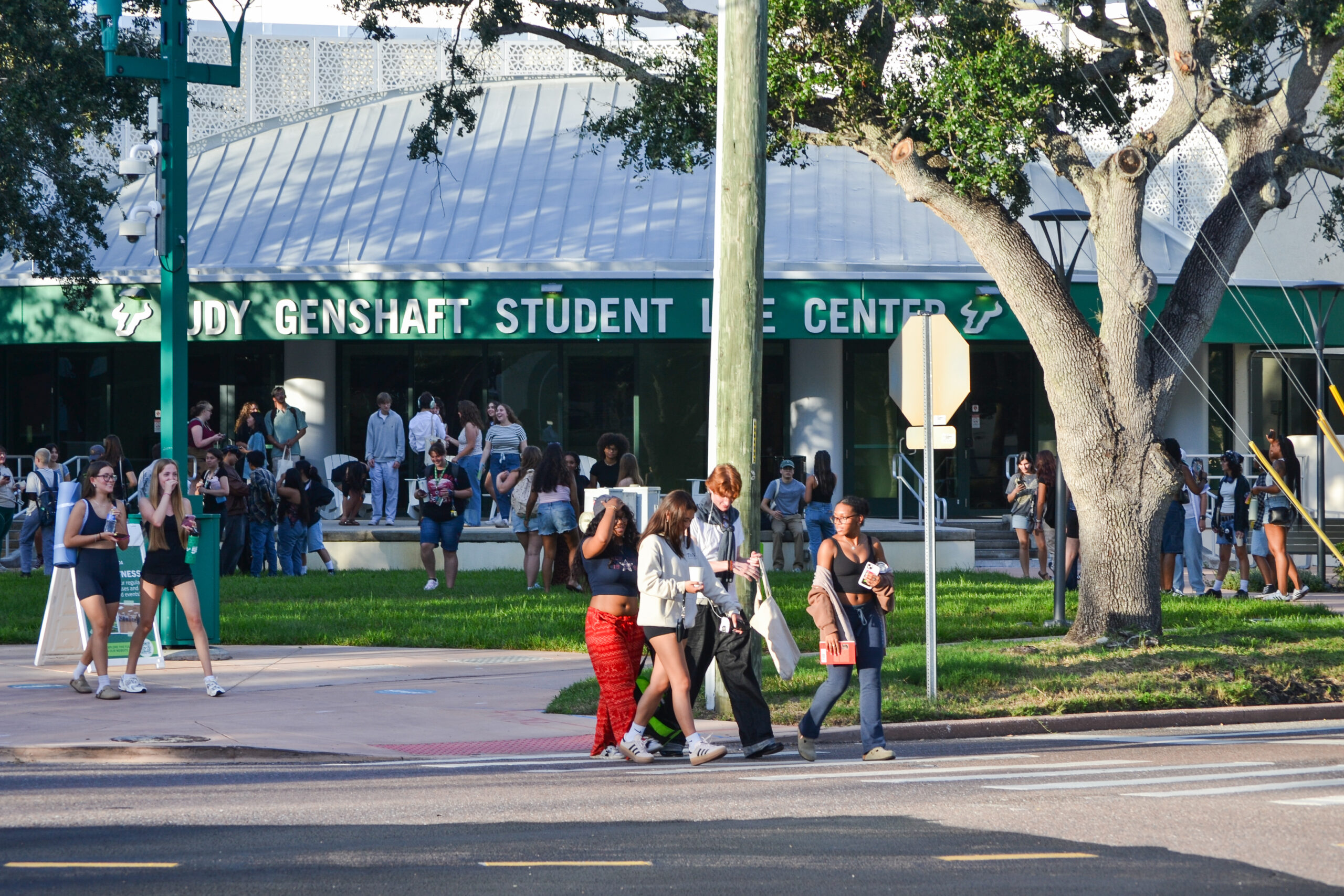
In the first weeks of September, under the order of Governor Ron DeSantis and the Florida Department of Transportation (FDOT), several street murals around St. Petersburg, including “Fluid Structures” on the USF St. Petersburg campus, were removed.
Officials cited safety concerns for drivers and pedestrians, but St. Petersburg Mayor Ken Welch shared in a public address that this was only a means to silence the city.
Josephine Combs, a third-year biology major, echoed this sentiment, sharing that this was a disheartening act and a poor use of tax dollars.
“This mural is supposed to represent the diversity and the types of students we have on our campus, and the fact that they’re out here just spraying black paint over every part of the mural, suppressing student voices, it’s just really upsetting,” Combs said.
USF St. Petersburg student government (SG)Lieutenant Governor Victoria Drews shared that while students may be aware of the rights they have at the university, they don’t always feel protected.
“I think that in every way, a lot of our students feel that we aren’t safe to express ourselves and to exercise our First Amendment right to the fullest extent,” Drews said.
“Of course, there are so many powers that be and so many different chains of commands that cause a push and pull in this process.”
When looking for help, Drews said there are several places students can go.
“We do have student legal advocates who are able to connect students with more of these resources,” they said.
“We also have resources like Ombuds, student right advocacy, where students can come with their personal and interpersonal issues, and find the right resources.”
Elise Prophete, USF St. Petersburg’s SG Governor, shared a few ways to encourage students to become more active as civic participants.
“I think making these guidelines more accessible and putting them in terms that students can understand… and by having more gatherings like this and encouraging students to exercise their rights,” Prophete said.
She added that the university can also go beyond the bounds of campus, especially when it comes to specific resources.
“I think we should definitely be pushing more into our community and seeing what legal services we can offer here,” Prophete said.
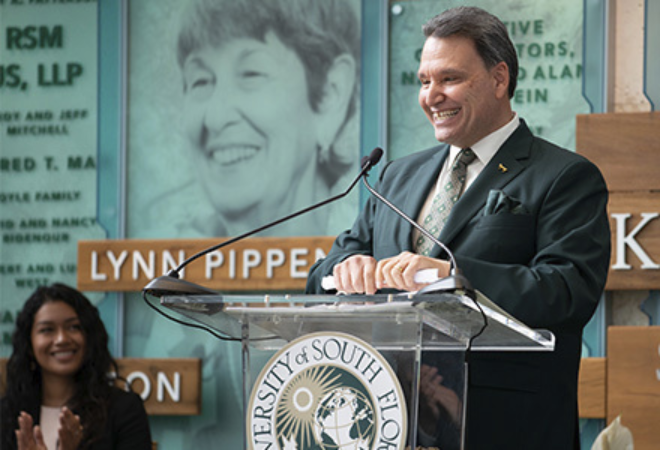
SG Solicitor General, Rawan Mahmoud, is responsible for representing the student body in academic-related programs and assisting in the clarification of USF governing documents.
She also safeguards due process and supports students filing complaints or grievances within the university.
On each USF campus, students have access to a student legal advocate and immigration legal aid who provide free legal advice and free consultations to students from Tampa Bay area attorneys and enhance public awareness.
Parker English, a third-year political science major, said that while students have many rights on campus, there are certain areas that the university could improve.
“In general, I feel as if USF could do a better job protecting the rights of marginalized communities, especially immigration rights,” English said. “It feels as if USF’s coordination with ICE leads to these rights being even further violated.”
When it comes to immigration, Drews said that the issue can exceed the bounds of the university and its capabilities.
“The issue is national, and the resources that we have can feel limited, but there is always an answer, and we’ll always do everything in our power to represent every student,” they said.
Parker adds that there’s a tricky dynamic between the rights outlined in federal law, such as rights against discrimination, sexual misconduct, and disability accommodations, and constitutional rights.
It’s a balancing act of protecting the rights of students while also limiting what students can do, said Parker.
An example he gives is the right to assemble, which requires proper procedures and applications to ensure safety.
“This comes at both a cost and a benefit. A cost being that often our right to protest, for example, is limited by bureaucratic regulations, which can often lead to what we care about being limited by the university, which can be a hindrance to advocacy.”
Campus leaders encourage students to seek support and guidance from them or the many resources available within the university.
“The biggest thing is that we want students to know that we hear them and that we are always, always, always making the effort to test the bounds of what we can and can’t do,” Drews said.