By Matthew McGovern
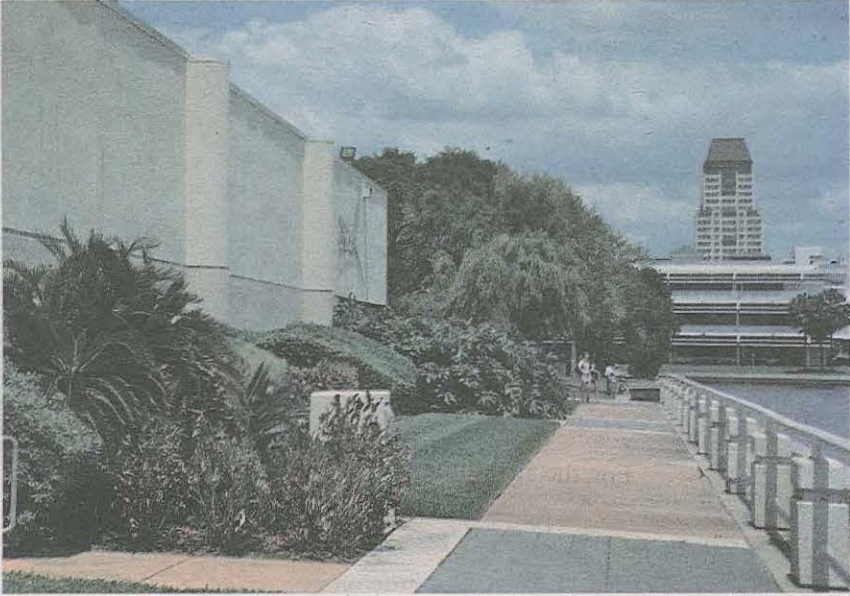
Amidst a community that prides itself on being a bustling hub for the arts in central Florida, the graphic arts program at the University of South Florida St. Petersburg is housed in a building that is often described by students as derelict and unwelcoming.
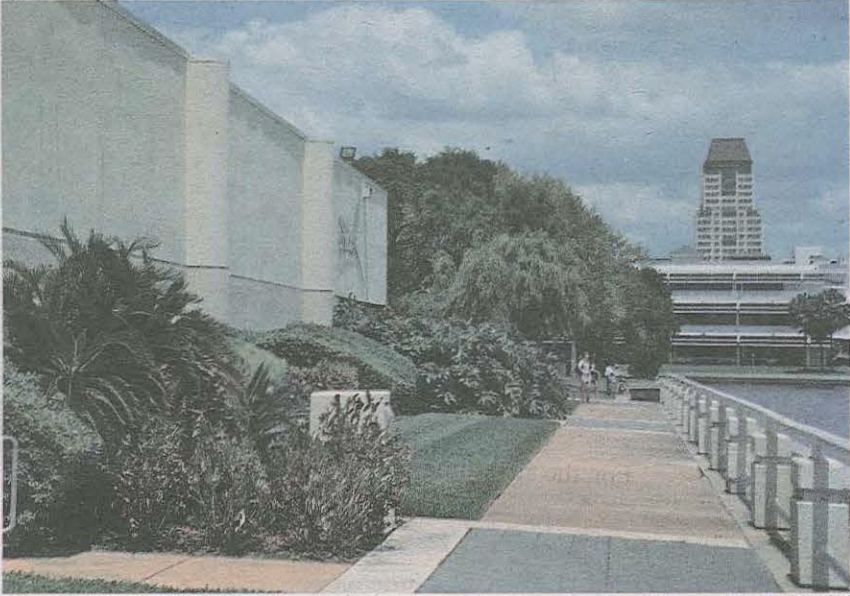
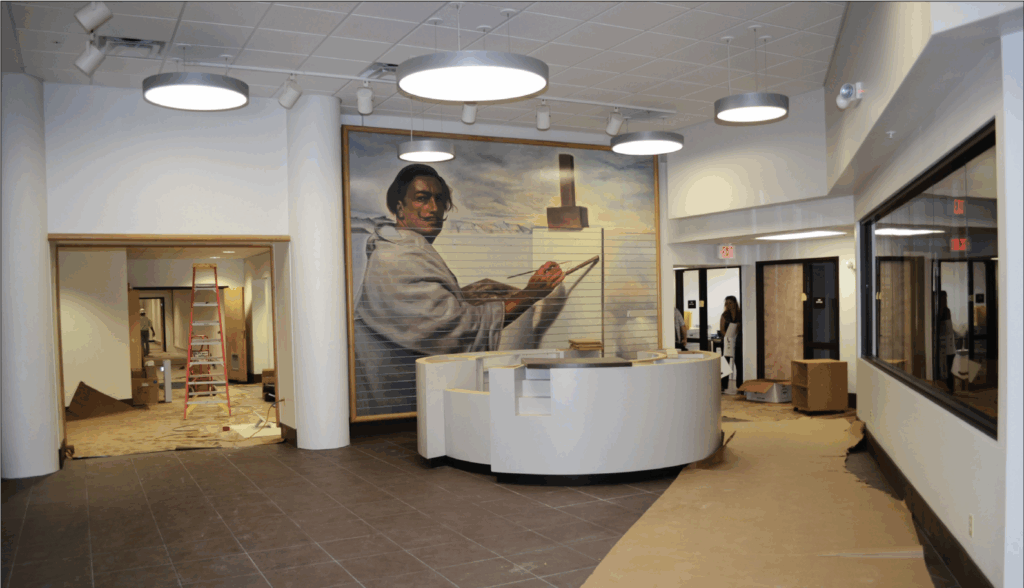
A dual irony exists in the physical appearance and history of Harbor Hall.
Until 1982, the building was used as a marine warehouse where boats were stored and repaired. From 1982 to 2011, it was the Dalí Museum, which moved to its permanent home in 2011.
Courtesy of the USF Library Archive
While grievances are plentiful, students current and former have directed their energy to envisioning a new future for Harbor Hall.
Former graphic arts student Gavin Hadro spent his time at USF St. Petersburg pondering what Harbor Hall could be in its most glorious form before graduating in spring 2025.
“I had always thought about making a new Harbor Hall as a project,” Hadro said. “People always say the place looks like a murder shack, a hospital, and all around just sterile.”
The building lacks the pizzazz and ‘artsiness’ that arts buildings usually bear at other universities, Hadro said. He also detailed how the strange layout began to make more sense once he and his fellow students found out more about the history of the building.
Courtesy of the USF Library Archive
For his senior project, Hadro created what he called ‘the craziest Harbor Hall possible.’. The renderings he produced with the input of over 20 other graphic arts students reflect what students in the program would hope to see, given the opportunity to significantly overhaul the space.
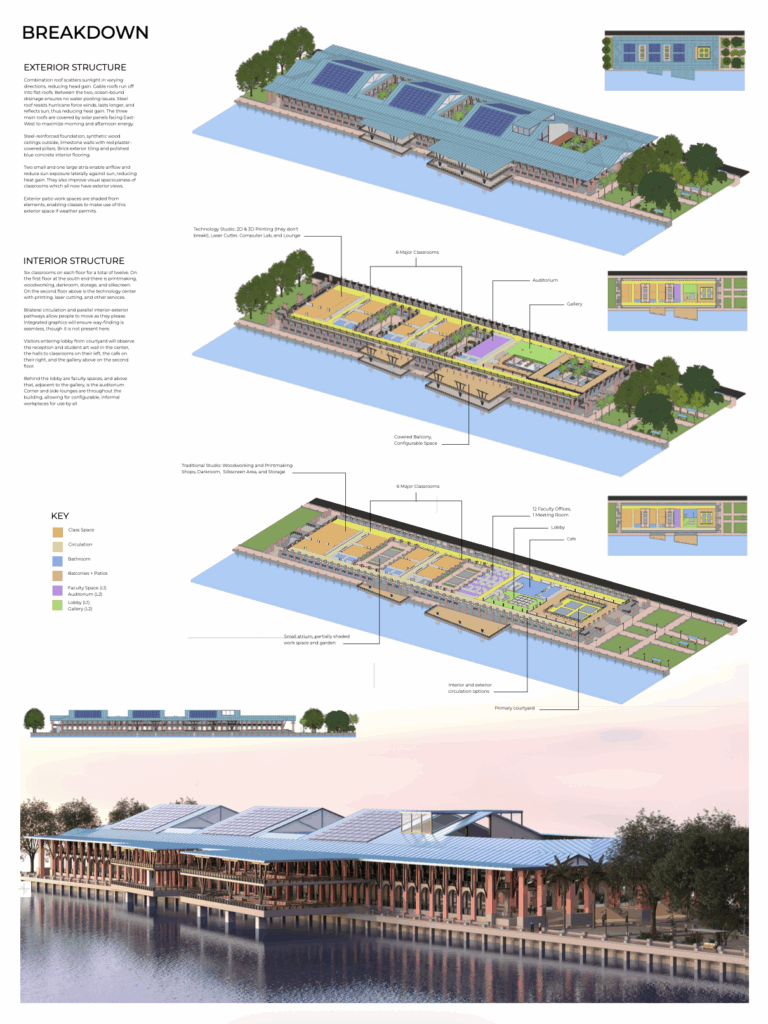
Courtesy of Gavin Hadro
“Some of the ideas I came up with in the project were from John Stanko, Erica Greenberg-Schneider and David Watts,” Hadro told The Crow’s Nest. “I found out that they have been trying to get more funding for the building to no avail.”
Instructors have continued to encourage students like Hadro and Montana Smith, a senior in the graphic arts program, works tirelessly to take what she and other students have been given inside of Harbor Hall.
On top of being a teaching assistant and employee at Greater Public Studio, Smith has taken it upon herself to work with instructors and fellow students to revamp Harbor Hall in lieu of receiving funds from the university to properly update classrooms.
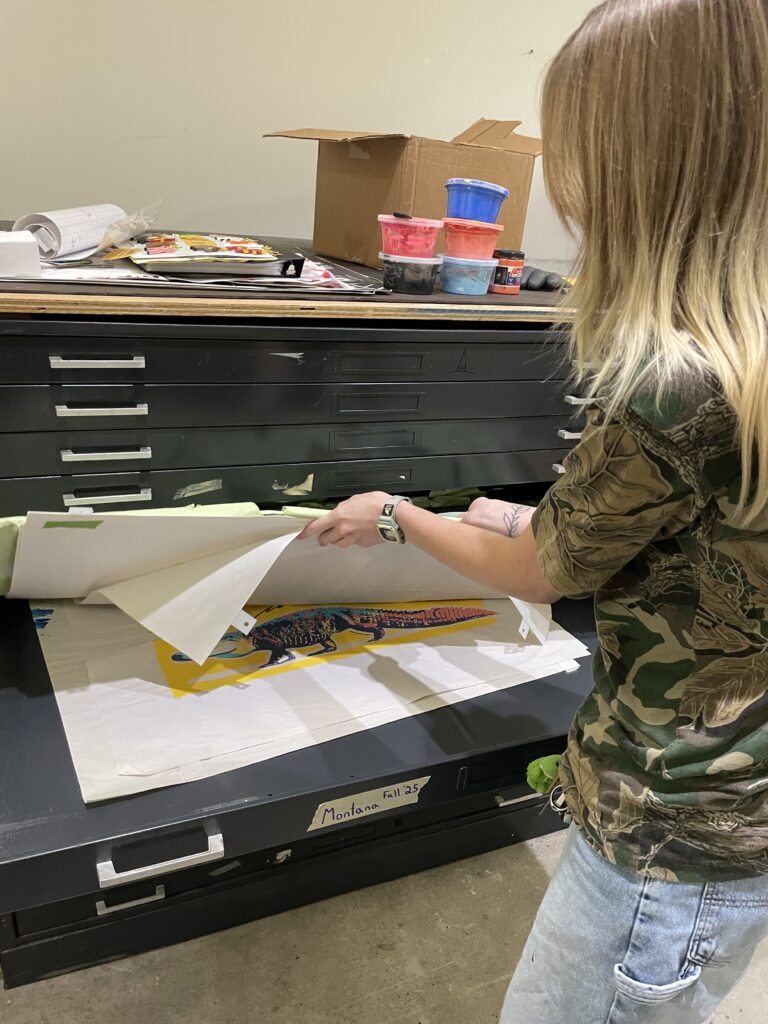
Photo by Matthew McGovern
“David [Watts] and a lot of the other professors have been advocating for more funding and redoing a lot of our classrooms for a while,” Smith said. “We got some new chairs recently, but I know it has been really hard for them to get us new tables that are made for drawing that don’t hold on to things like ink and charcoal.”
Smith told The Crow’s Nest that in addition to hindering the creative process of students in the program, the lack of consistent renovation has slowly created a divide between upper and underclassmen.
She describes having met several friends who are new to the program from being a teaching assistant, but understands that not all students are given the opportunity to make these connections, citing a lack of communal spaces as the root of the issue.
“The professors can teach us so much, but I feel like it is also important for older students to be able to share their portfolios with students who are new to the program,” Smith said.
From sanding tables and reclaiming silkscreens to uncovering archived reference materials left behind by students and instructors, she hopes to leave Harbor Hall a better space than it was as her spring 2026 graduation date quickly approaches.
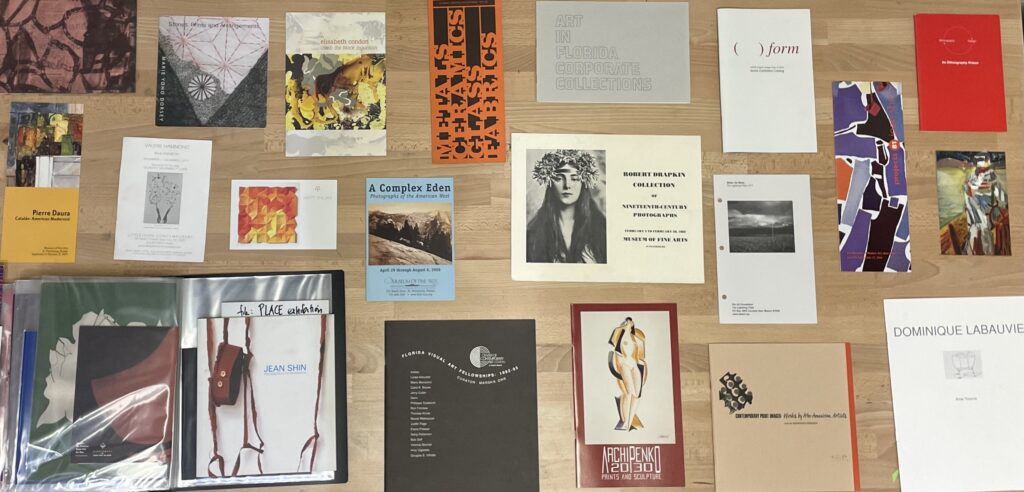
Photo by Matthew McGovern
Smith’s various undertakings differ from the large-scale dreams of students like Gavin Hadro’s, but professors are welcoming every effort toward the building’s long-awaited transformation – no matter how small the step.
“When you’re in a space for so long, it’s hard to reimagine it,” Smith said. “They’re excited that there’s someone that can do something – even if it’s just sanding down tables.”


![“[The 9/11 Memorial Stair Climb is] really to show our support and help build community and camaraderie with the first responders that are putting on this event at the Rowdies Stadium and to showcase our office and give the student veterans here and miliary-connected students something positive to do that day and a feeling of belonging,” veteran and junior personal financial planning major Thomas Wells said. Courtesy: Tampa Bay Rowdies](https://crowsneststpete.com/wp-content/uploads/2026/09/Stair-Climb-1.jpg)