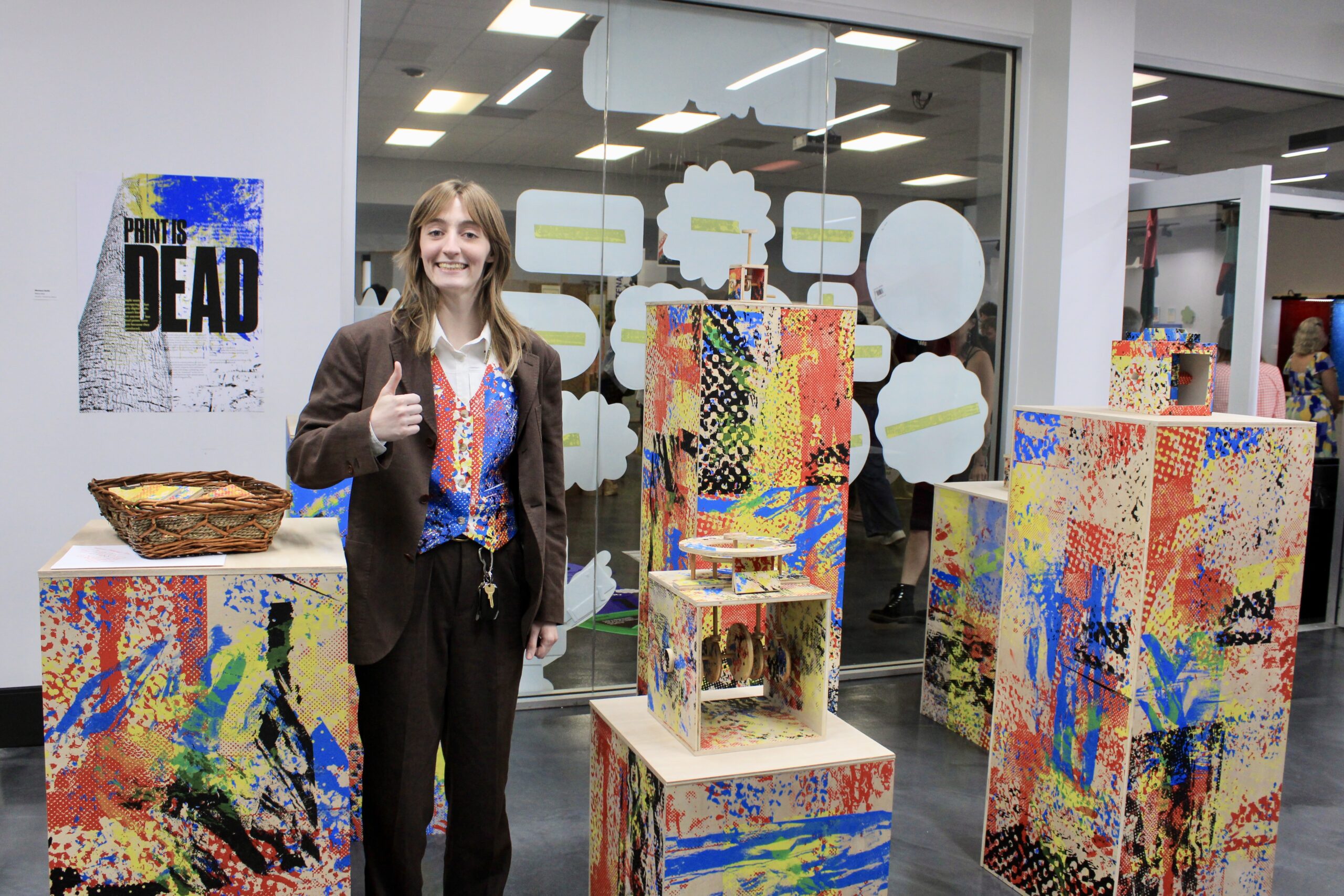
Senior graphic arts major with a concentration in graphic design Montana Smith presented her piece, “Print is Alive,” at the senior showcase.
Photo by María José Solís | The Crow’s Nest
By Alisha Durosier, Julia Birdsall, Zariya Bankston & Reagan Haskell
There is only one place on the University of South Florida St. Petersburg campus where students’ stories, cultures and passions are brought to life: Harbor Hall during the annual senior graphic arts showcase.
On April 10, students and community members filed into Harbor Hall’s gallery space to see the graphic arts seniors’ work. Their installations serve as their thesis, a final project before graduation.
“Senior thesis is not for the faint of heart,” graphic arts senior with a concentration in graphic design, Lauren Gaubert, told The Crow’s Nest.
Gaubert’s thesis project, titled “Something Blue,” pays homage to the inextricably linked histories of computers and fabric arts, along with women’s contributions to the development of technology.
“The first computer was made out of a Jacquard Loom and the first computer programmer was a woman. She was the one who helped turn the loom into the analytical engine,” Gaubert said. “And I think art and STEM disciplines are so deeply intertwined; there’s not a lot of conversation about it.”
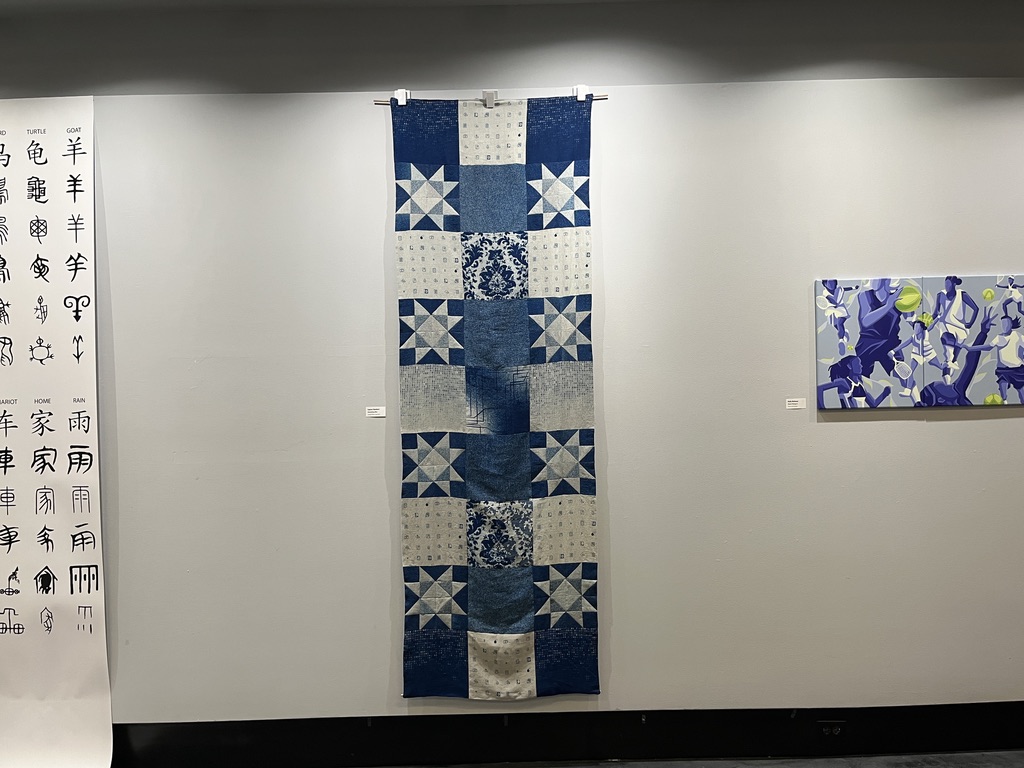
Gaubert experimented with fabric arts for her project, creating a quilt out of cyanotyped pieces of fabric. Gaubert doesn’t see herself venturing into fabric arts post-graduation but wanted to take advantage of all the resources the graphic arts program has available.
Senior graphic design major Montana Smith combined woodwork and screen printing for her final project — interactive wooden mechanisms titled “Print is Alive.”
The project, Smith said, is inspired by the common idea that the art of printing is dead and her desire to challenge that notion.
“I wanted to figure out how to physically make print alive,” she said.
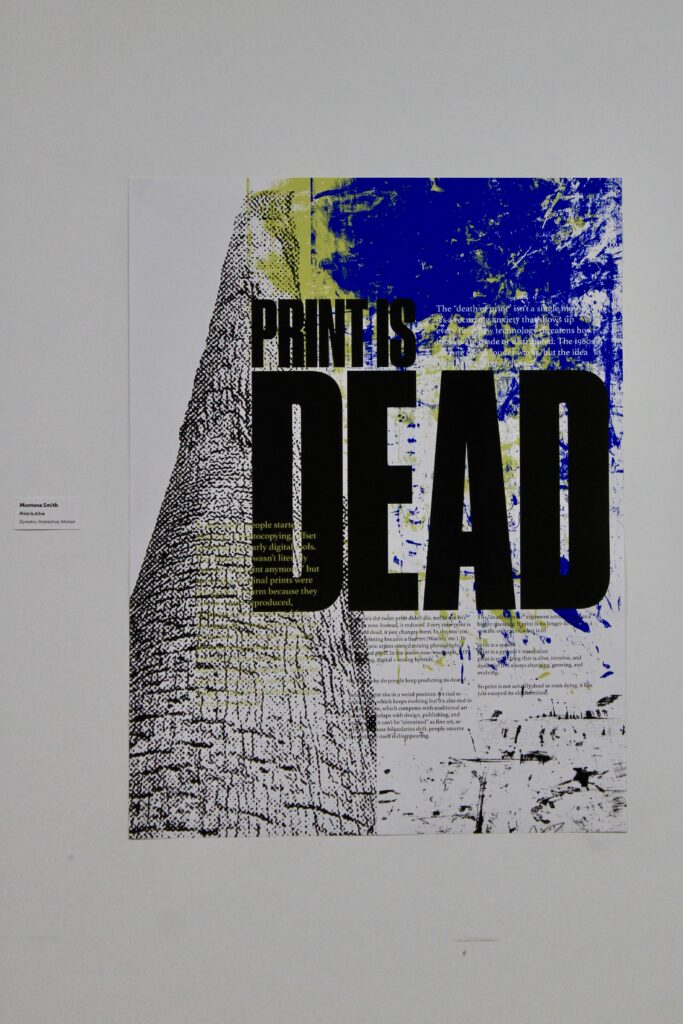
Her process involved photographing organic and inorganic materials under microscopes, including ink, emulsion and mesh screens—all materials used to produce silkscreen prints. She then combined these images to create textures, which she printed onto wooden and paper mechanisms that audience members could interact with.
Smith also live-screen-printed posters for the event.
“[The need for audience interaction] ties into the idea that in order to keep print alive, you have to interact with it, and you have to engage with it,” she told The Crow’s Nest.
2026 graphic arts seniors were not assigned a theme for their thesis, which Gaubert and Smith both appreciated.
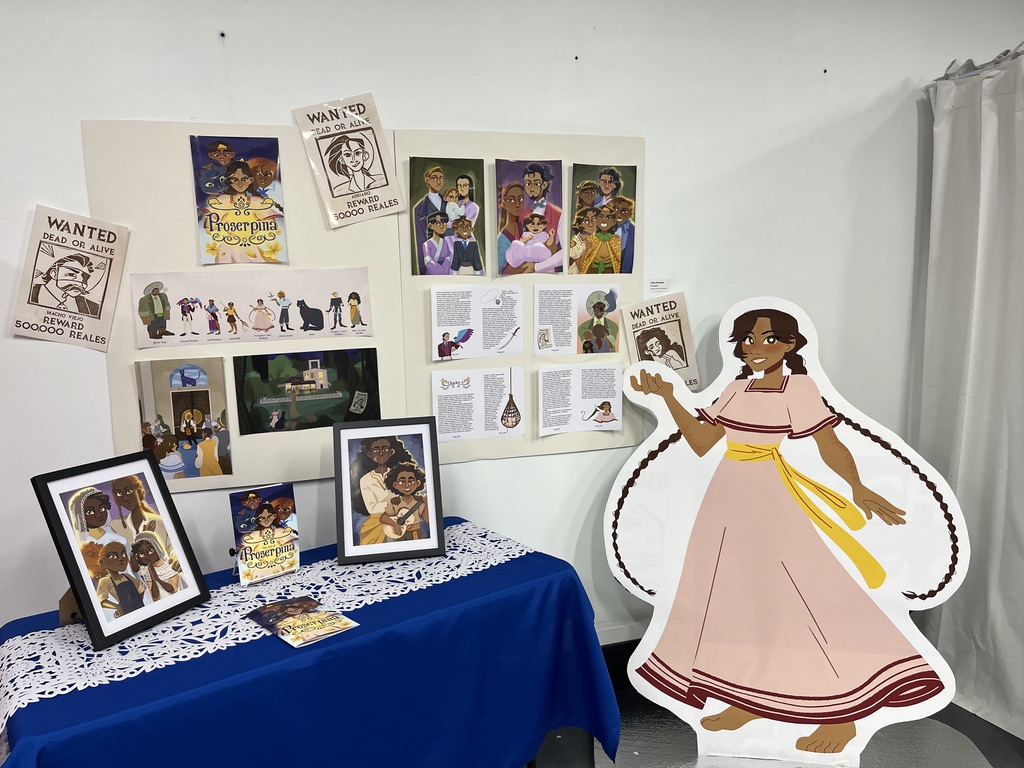
“I enjoy that there’s no through line. There’s no conclusion to be reached,” Gaubert said. “It really is just an exploration of our own individual passions, talents, [and] directions we want to take in our career or completely the opposite.”
Smith also pointed out that every project looked unique.
“I liked it because I got to do whatever I wanted with it. It kind of led to more experiments,” she said. “I got to experiment with a lot more things because I didn’t really have any guidelines.”
Graphic design professor David Watts told The Crow’s Nest that he wanted the seniors’ gallery to create conversation and spark curiosity.
“I want them to ask questions and [leave] unsure to the point where they start thinking about the work an hour later, a day later, a year later,” he said. “I don’t want to come in and say, ‘That was pretty.’ I want them to come in and say, ‘What was that?’”
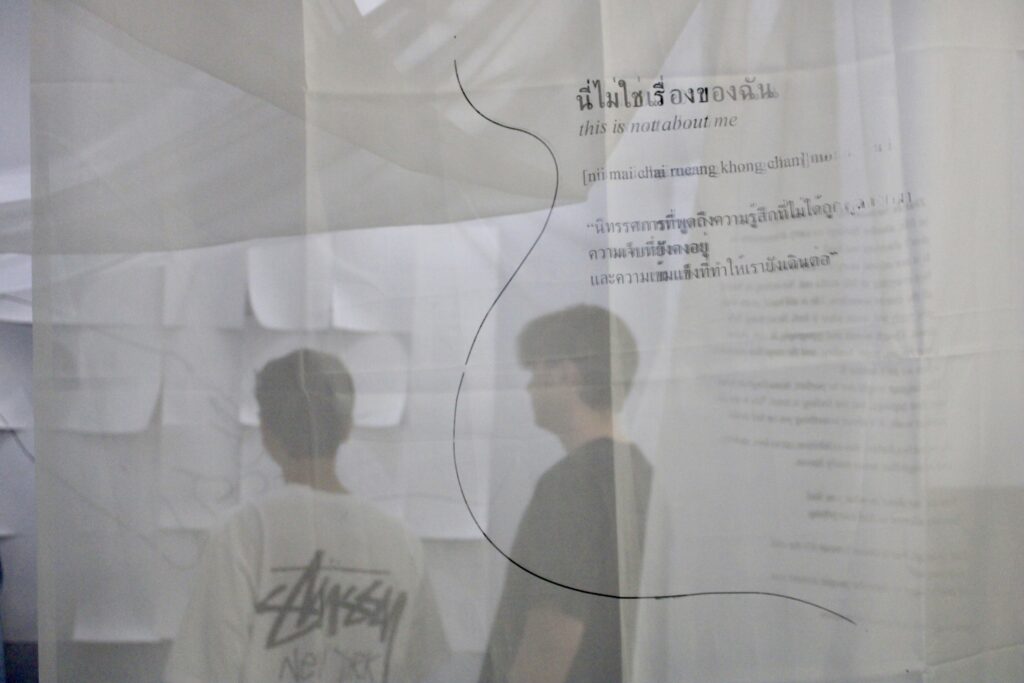
Graphic design senior Alexis Okla said that audience perception was always something she and her peers considered.
“Are they gonna interpret it the same way that you intended? And will the display come across, like you intended?” she wondered. “And so for myself, I do feel that that is present in my work, and I’m excited for everybody to see it.”
Like Smith, Okla incorporated woodwork into her installation titled “Don’t Fence Me In.”
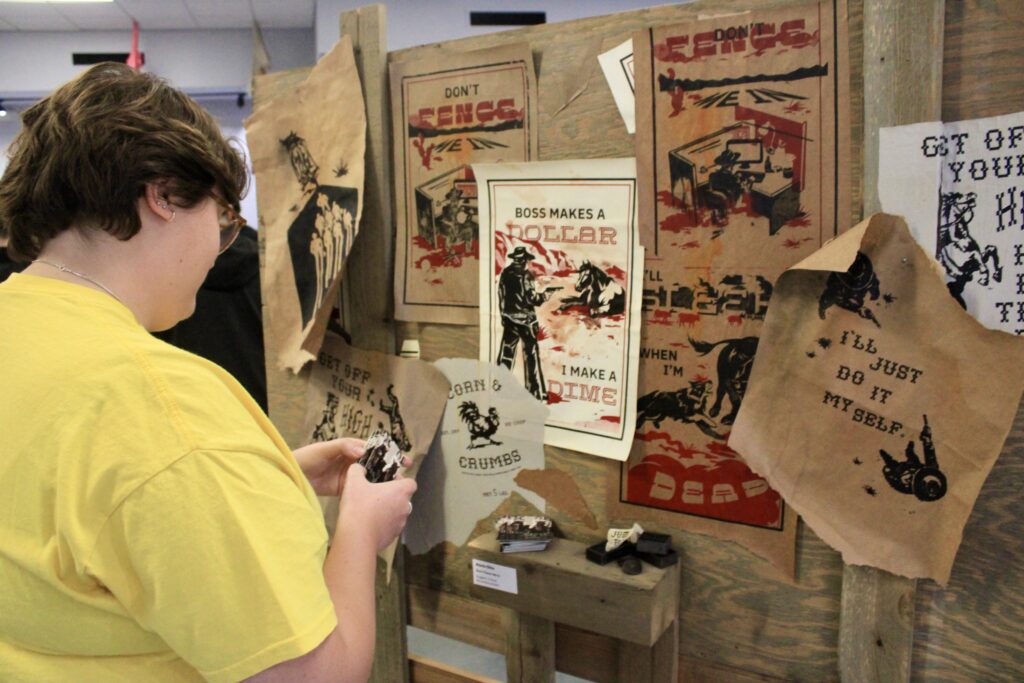
This idea — which is inspired by her grandfather’s work ethic — sparked for her when she was first accepted into the graphic arts program at the end of her sophomore year.
“I started to consider, I have all these skills now, and really, what do I want to do with them? Because getting into the program in itself was hard work, and when folks ask about my thesis, that’s usually what I say. It’s hard work,” Okla said.
This sentiment lends to the central theme of her installation, where she also built a corral fence to display screen-printed posters.
“It is an accumulation of everything you’ve done because… you work so hard to get into the graphic design program, and it truly is rewarding being able to hit that point of the senior showcase,” Okla said about the annual showcase.
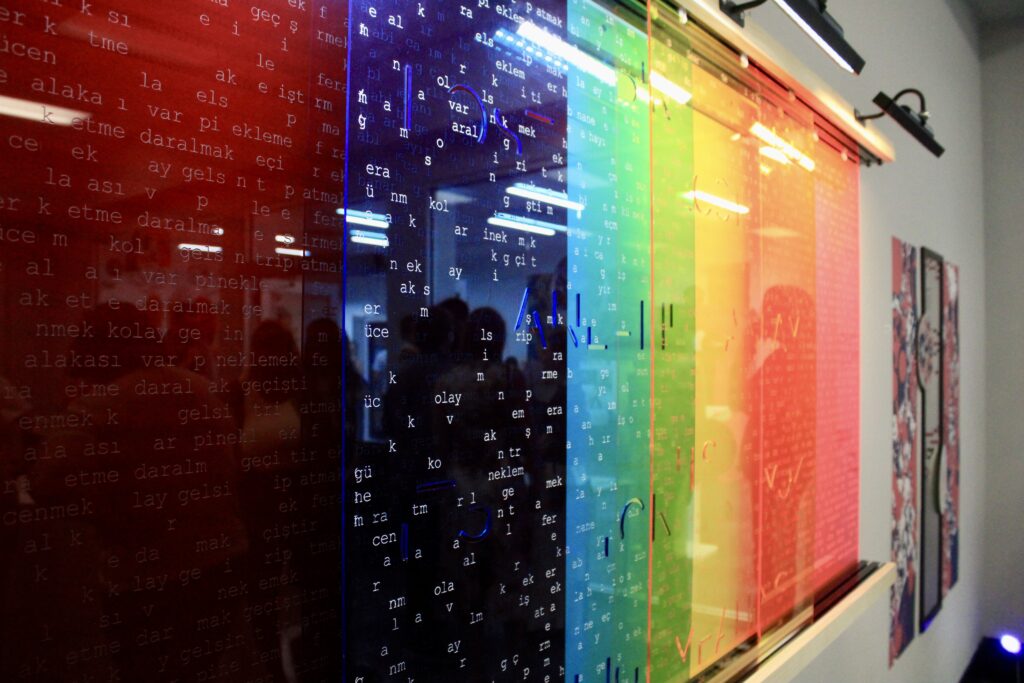
However, this achievement does not come without its hardships.
Aside from the resources provided by the program, students self-funded their thesis projects.
And as artist they still struggle under the pressure of perfectionism and the daunting task of completing such a large project.
“We kind of come into the program with designers’ eyes because that’s what they look for in portfolio submissions. We hone that further…until it makes us borderline neurotic about the work that we’re putting out,” Gaubert said. “And I am very dedicated to my craft.”
However, many have found that struggling alongside their peers makes the experience easier to bear.
Illustration senior Elizabeth Kurtz, whose piece titled “Counter Climb” is a prototype of a game she is developing about a rat, told The Crow’s Nest that she appreciates the close-knit nature of her cohort.
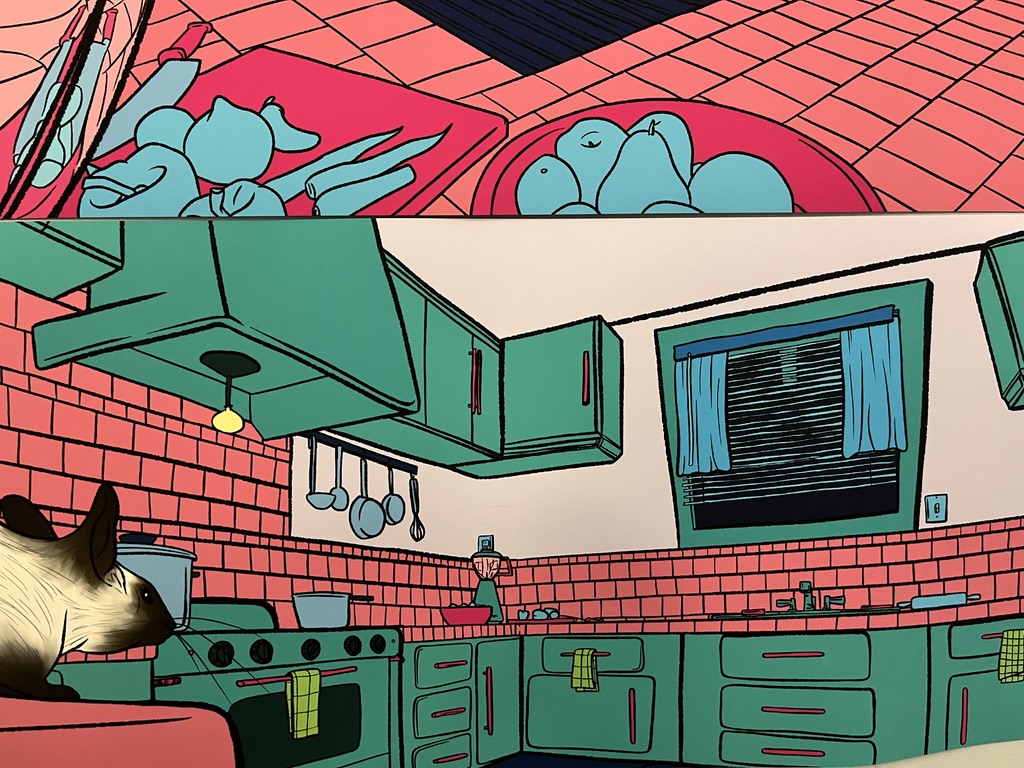
“Everyone is kind of going through the same thing, and so it really creates a sense of camaraderie,” she said. “Between that and knowing that all the people around me are amazing designers, I can lean on them when I’m having trouble and then be there for people when they’re having trouble too.”
Gaubert echoed this sentiment.
“I mean, in my thesis alone, I borrowed some film, some imagery that my friend had created, and we stayed up in a Harbor [hall] probably way too late, working alongside each other,” Gaubert said. “And I think, were we to be more isolated and not quite as good friends, the program wouldn’t be as much of a positive experience. And I think we would yield poorer results.”


![“[The 9/11 Memorial Stair Climb is] really to show our support and help build community and camaraderie with the first responders that are putting on this event at the Rowdies Stadium and to showcase our office and give the student veterans here and miliary-connected students something positive to do that day and a feeling of belonging,” veteran and junior personal financial planning major Thomas Wells said. Courtesy: Tampa Bay Rowdies](https://crowsneststpete.com/wp-content/uploads/2026/09/Stair-Climb-1.jpg)